
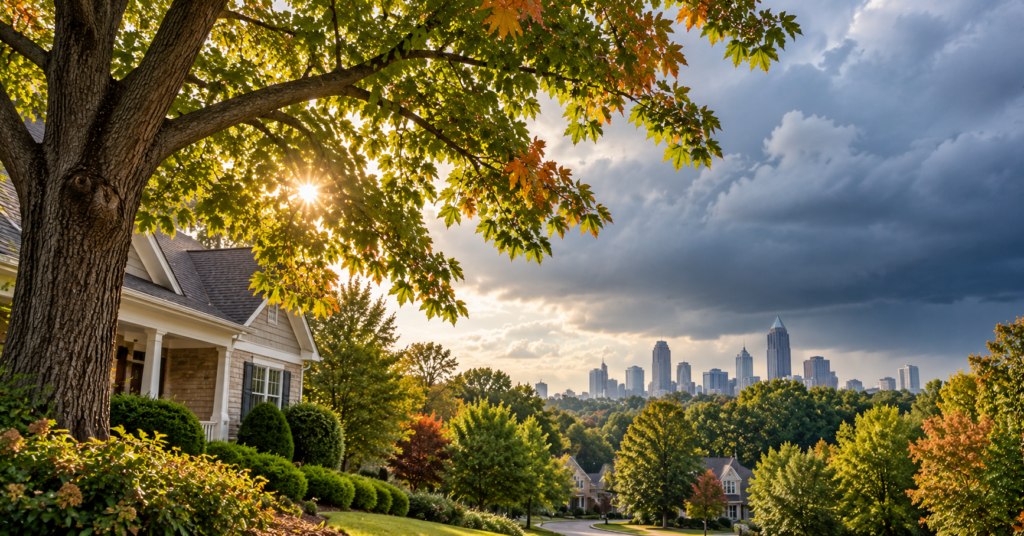
Protect your property and ensure tree health this hurricane season. A complete September tree maintenance checklist for Atlanta homeowners.
Why September Tree Care Matters in Atlanta
September marks the beginning of Atlanta’s hurricane and severe storm season. As winds pick up and heavy rains arrive, weak branches, diseased trees, and poorly maintained canopies become serious threats to your home, property, and family safety. Taking action now—before storms hit—can save thousands in emergency tree removal costs and prevent injuries.
According to the National Weather Service, Atlanta experiences an average of 2-3 tropical storm systems annually between August and October. Proper tree maintenance reduces hazards by 80%.
The 9 Essential September Tree Care Tasks
1. Conduct a Complete Tree Inspection
Walk your property and examine every tree for:
- Cracked or split trunks
- Dead, diseased, or hanging branches (widow makers)
- Bark damage or large cavities
- Leaning trunks or root heave
- Fungal growth or mushrooms at the base
If you spot damage, photograph it and contact a certified arborist for a professional assessment. Many Atlanta tree removal and maintenance services offer free consultations.
2. Prune Dead and Dangerous Branches
Remove all dead wood before hurricane season. Dead branches are weak and will snap under wind pressure, potentially damaging your roof, car, or power lines. Always use the “three-cut method” for proper pruning:
- First cut: Undercut the branch 12-18 inches from the trunk
- Second cut: Cut from the top, slightly further out than the undercut
- Third cut: Remove the stub flush with the branch collar
Pro tip: Never top your trees. Topping creates weak regrowth and weakens storm resistance.
3. Remove Crossing and Rubbing Branches
Branches that cross or rub together cause wounds and bark damage. Remove one of the conflicting branches. This improves air circulation through the canopy, reducing disease risk and improving overall tree structure for storm resilience.
4. Thin Dense Canopies for Wind Resistance
Overgrown canopies create wind resistance and can cause trees to fail during storms. Professional thinning removes 15-20% of interior branches, reducing sail area while maintaining the tree’s natural shape. This is especially important for large oaks, pines, and sweetgums common to Atlanta.
Dense canopies also trap moisture and promote fungal diseases. Thinning improves light penetration and promotes tree health.
5. Check for Signs of Disease or Insect Damage
Look for:
- Yellowing or discolored foliage
- Wilting despite adequate water
- Oozing sap or pitch tubes
- Unusual insect activity
- Missing bark or cankers
Diseased and weakened trees fail more easily in storms. Treat infestations promptly or remove severely damaged trees before hurricane season arrives.
6. Inspect and Improve Root Health
Healthy roots anchor trees against wind. Look for:
- Root circling around the base (pot-bound roots)
- Soil compaction around the trunk
- Mulch piled against the bark
Correct practices:
- Apply 2-4 inches of mulch, 6 inches away from the trunk
- Aerate compacted soil to encourage deep root growth
- Water deeply during drought (Atlanta averages 2-3 dry weeks in September)
7. Stake Young or Weak Trees (Properly)
Trees planted within the last 2-3 years may need support. Use adjustable tree stakes with flexible ties:
- Install stakes on the windward side
- Leave loose ties to allow slight movement (builds strength)
- Remove stakes after one year
Improper staking (too tight or too long) weakens tree trunks and prevents natural strengthening.
8. Clean Up Debris and Remove Hazard Trees
Fallen branches, dead trees, and debris become projectiles in high winds. Clear your property of:
- Fallen branches and limbs
- Dead trees or severely damaged specimens
- Leaning trees with shallow roots
- Trees with split trunks or major cavities
For removal, contact licensed Atlanta tree movers and removal specialists who are equipped to handle large or hazardous trees safely.
9. Schedule Professional Tree Care Early
September is peak season for arborists and tree service companies. Schedule inspections and work immediately—don’t wait until October when demand surges and prices increase. Professional certified arborists can:
- Identify trees at high risk of failure
- Perform structural pruning for storm resilience
- Recommend removal or treatment options
- Provide insurance documentation for hazard trees
Common Atlanta Trees That Need Extra Attention
Water Oaks – Fast-growing but weak wood; prone to splitting in storms
Sweetgum – Dense canopy increases wind resistance; needs aggressive thinning
Loblolly Pines – Common but brittle; check for root collar damage
Bradford Pears – Notoriously weak branch angles; often fail in wind
These species benefit most from professional pruning and inspection before hurricane season.
Professional Help: When to Call a Tree Service
You should hire a professional arborist or tree service if:
- Trees are over 25 feet tall
- Branches hang over your roof or power lines
- You see signs of disease or significant damage
- Trees are leaning or have visible root damage
- You’re uncertain about whether a tree needs removal
Look for certified arborists with credentials and proper insurance. Avoid companies that:
- Recommend topping trees
- Don’t provide written estimates
- Won’t supply proof of insurance
- Offer removal-only services without assessment
Cost-Effective Tips for DIY Tree Maintenance
For smaller tasks you can handle yourself:
- Remove branches smaller than 1 inch in diameter
- Clear fallen debris from around tree bases
- Properly mulch trees (not volcano-mulched)
- Water deeply during dry periods
- Monitor tree health throughout the season
For any branch work on large trees, electrical lines, or near structures, always hire professionals.
FAQ: September Tree Care
Q: Is September too late to prune trees?
A: Early September is fine for structural pruning. Avoid heavy pruning after mid-September as it promotes new growth that won’t harden before frost.
Q: How much will tree removal cost in Atlanta?
A: Costs vary ($500-$3,000+) depending on tree size, location, and complexity. Get 2-3 quotes from certified professionals.
Q: Should I treat diseased trees or remove them?
A: If a tree is less than 30% diseased and has good structure, treatment may work. Severely diseased or structurally weak trees should be removed before storms.
Q: Can I stake trees myself?
A: Yes, but use adjustable ties and proper stakes. Improper staking causes more harm than good.
Prepare Now, Protect Later
September tree care isn’t just about aesthetics—it’s about safety and property protection. Trees that are properly pruned, inspected, and maintained can withstand Atlanta’s fall storms and thrive for decades.
Don’t wait for the forecast of the next hurricane to think about your trees. Start your September tree maintenance checklist this week.