
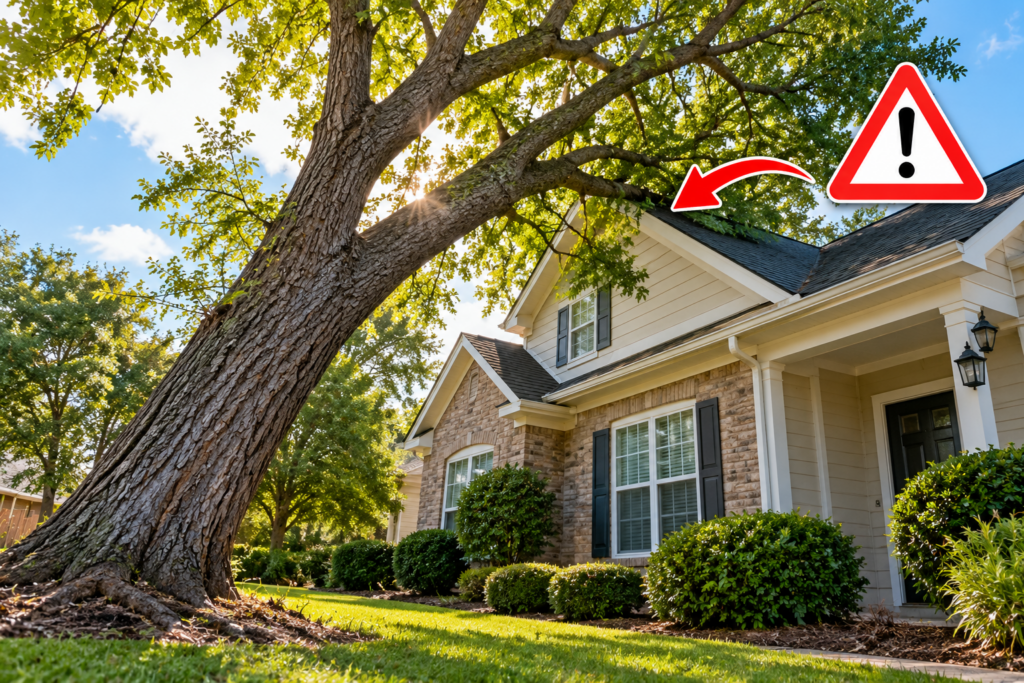
A tree leaning toward your house can be easy to ignore, especially if it has been growing that way for years. But not every leaning tree is automatically dangerous, and not every leaning tree needs to be removed.
The important question is why the tree is leaning and whether the lean is changing.
A tree that has developed a new or noticeable lean, especially after heavy rain, strong winds, or damage to its roots, deserves closer attention. Cracks in the trunk or large branches, roots lifting from the ground, and other signs of structural damage can indicate that a tree should be evaluated by a qualified tree professional.
For Atlanta homeowners, knowing what to look for can help you recognize a potentially hazardous tree before it becomes a serious problem.
Is a Leaning Tree Always Dangerous?
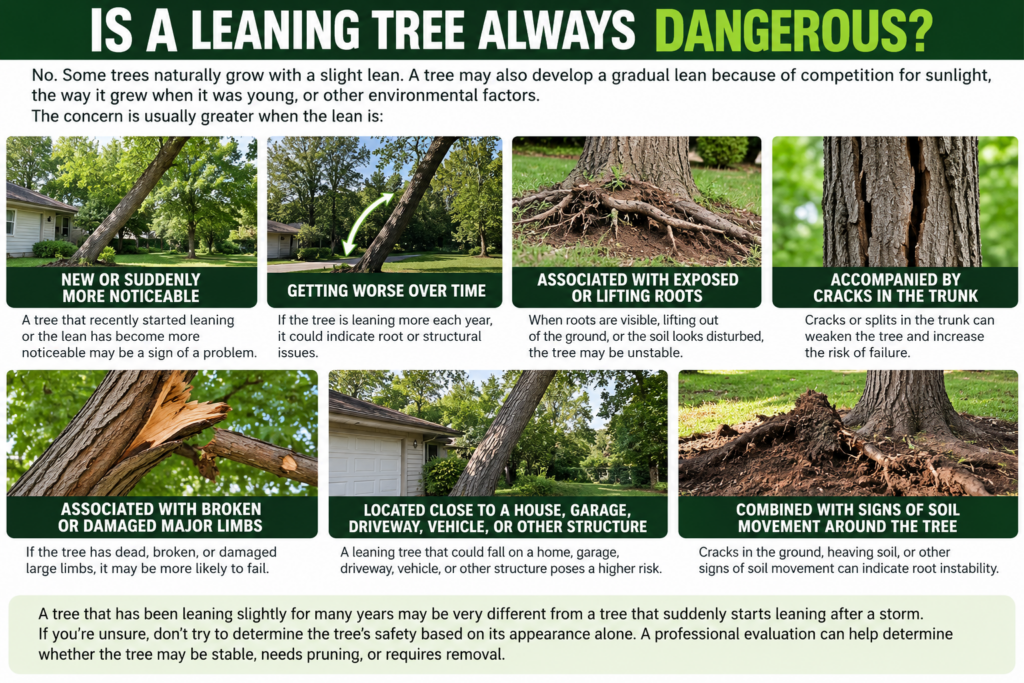
No.
Some trees naturally grow with a slight lean. A tree may also develop a gradual lean because of competition for sunlight, the way it grew when it was young, or other environmental factors.
The concern is usually greater when the lean is:
- New or suddenly more noticeable
- Getting worse over time
- Associated with exposed or lifting roots
- Accompanied by cracks in the trunk
- Associated with broken or damaged major limbs
- Located close to a house, garage, driveway, vehicle, or other structure
- Combined with signs of soil movement around the tree
A tree that has been leaning slightly for many years may be very different from a tree that suddenly starts leaning after a storm.
If you’re unsure, don’t try to determine the tree’s safety based on its appearance alone. A professional evaluation can help determine whether the tree may be stable, needs pruning, or requires removal.
7 Warning Signs That a Leaning Tree May Need Attention
1. The Tree Recently Started Leaning
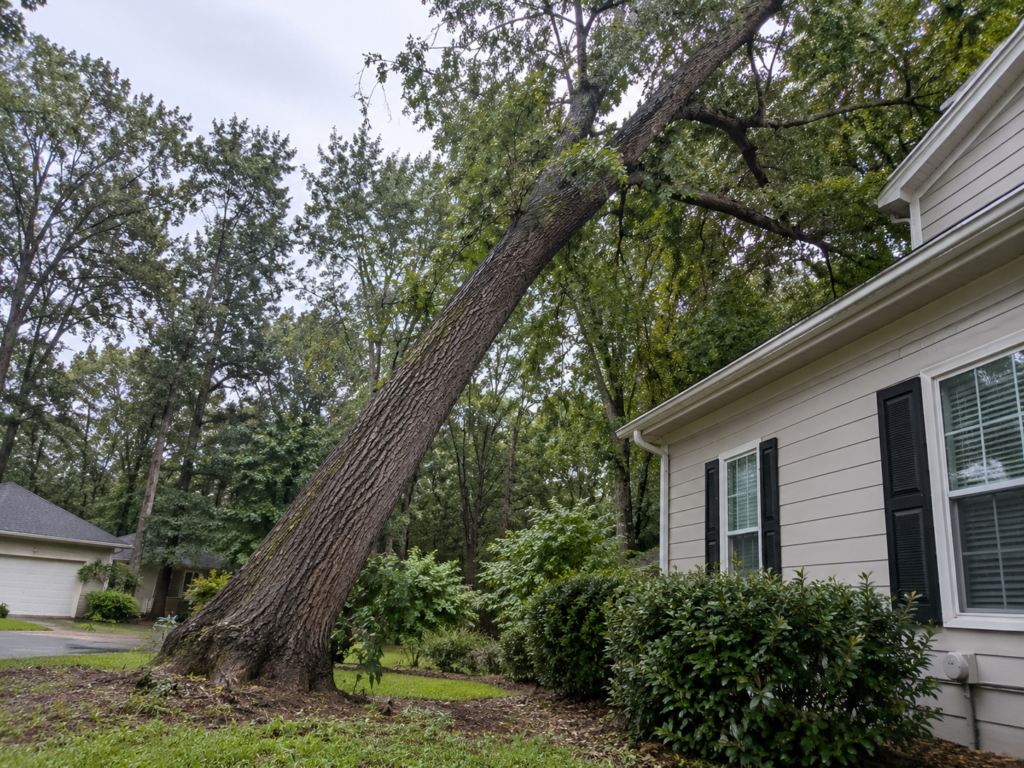
One of the biggest things to watch for is a new lean.
If a tree looked upright before a storm and now appears to be leaning toward your home, something may have changed underground or within the tree itself.
Strong winds, saturated soil, root damage, construction activity, or damage to the trunk can affect a tree’s stability.
A new lean doesn’t automatically mean the tree will fall, but it is a reason to have the tree evaluated.
2. You Can See Roots Lifting Out of the Ground
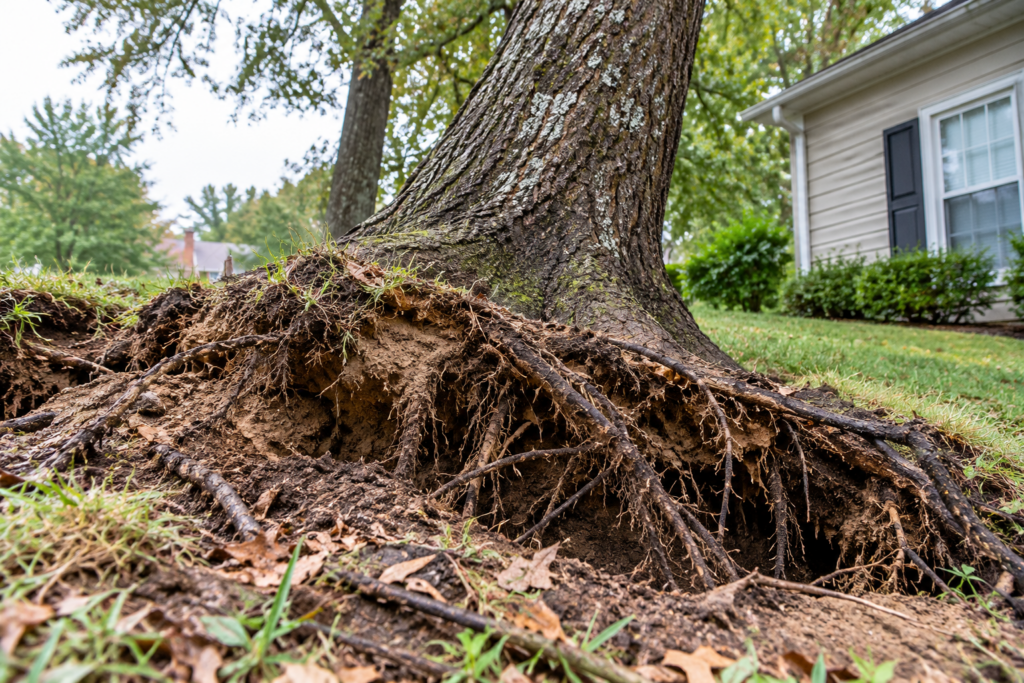
Look at the area around the base of the tree.
If the soil appears to be lifting on one side and you can see roots pulling upward from the ground, the tree may have experienced movement in its root system.
This is particularly important after severe weather.
Trees Atlanta recommends having trees with roots that appear to be lifting from the ground evaluated by a Certified Arborist.
Do not climb the tree, push against it, or attempt to stabilize it yourself. A tree under tension can behave unpredictably.
3. There Are Cracks in the Trunk
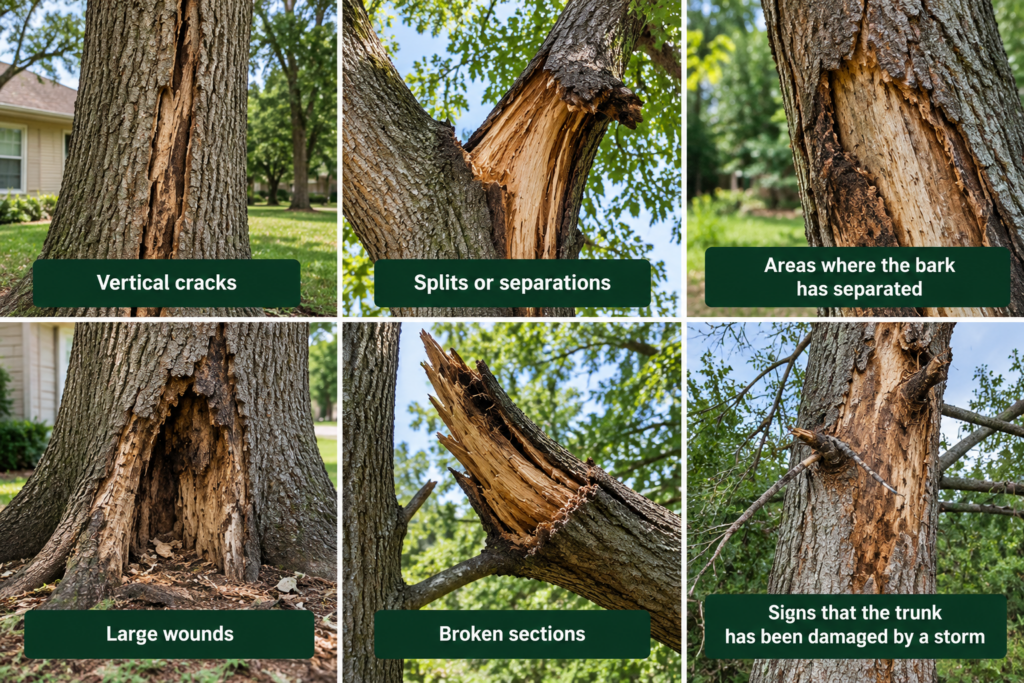
Cracks in the trunk deserve attention, particularly when they are large, deep, or associated with a significant lean.
Check the trunk for:
- Vertical cracks
- Splits or separations
- Areas where the bark has separated
- Large wounds
- Broken sections
- Signs that the trunk has been damaged by a storm
A crack does not automatically mean a tree must be removed. However, the location, size, depth, and overall condition of the tree matter.
A qualified professional should evaluate significant structural damage rather than relying on a homeowner’s visual inspection alone.
4. Large Limbs Are Cracked, Broken, or Hanging
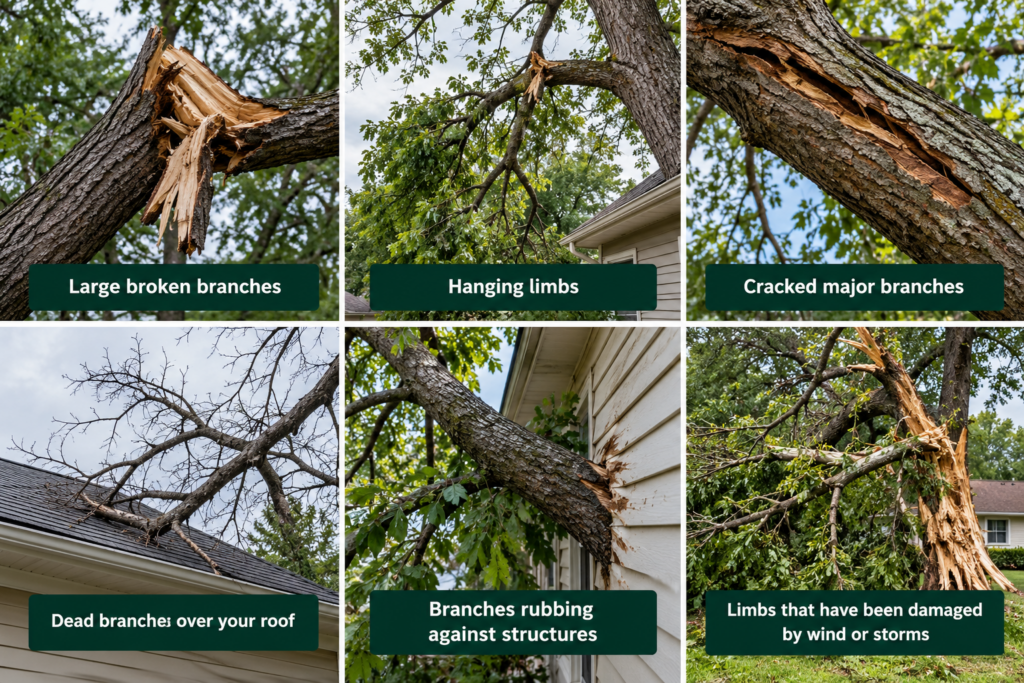
Sometimes the main concern isn’t the entire tree—it’s a large branch that could fall.
Look for:
- Large broken branches
- Hanging limbs
- Cracked major branches
- Dead branches over your roof
- Branches rubbing against structures
- Limbs that have been damaged by wind or storms
Large branches can cause significant damage if they fall onto a roof, vehicle, fence, or other property.
If a damaged limb is close to your house or power lines, keep your distance and contact the appropriate professional. Never attempt to remove a branch that is touching or near electrical lines yourself.
5. The Soil Around the Tree Has Changed
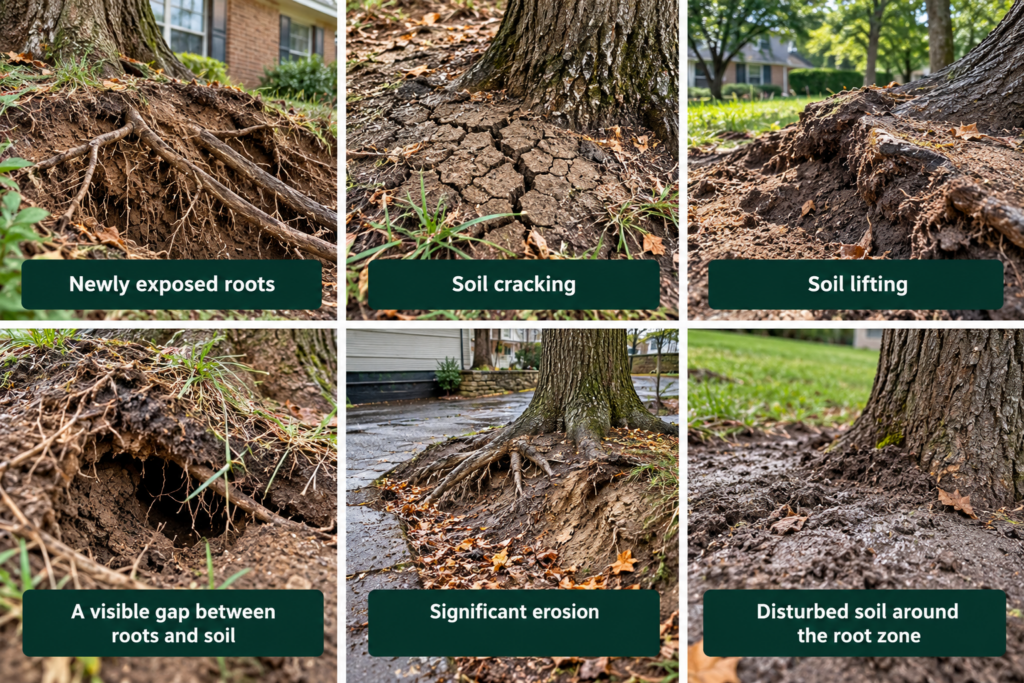
Pay attention to the ground around the tree.
Changes such as:
- Newly exposed roots
- Soil cracking
- Soil lifting
- A visible gap between roots and soil
- Significant erosion
- Disturbed soil around the root zone
can indicate that the tree or its root system has experienced movement.
Heavy rain can also saturate the soil, potentially affecting the stability of trees whose roots are already compromised.
This is one reason it’s worth inspecting trees after severe weather rather than waiting until visible damage becomes worse.
6. The Tree Is Leaning Toward a Structure
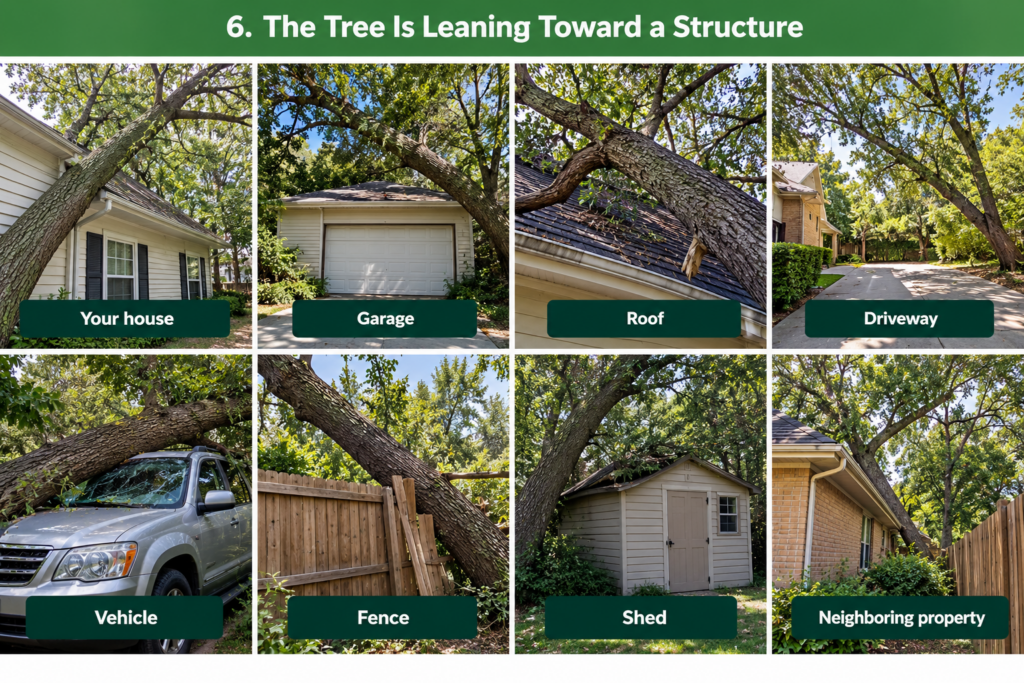
Location matters.
A tree leaning toward an open yard presents a different potential hazard than a tree leaning toward:
- Your house
- Garage
- Roof
- Driveway
- Vehicle
- Fence
- Shed
- Neighboring property
The closer the tree is to a structure, the more important it becomes to understand its condition and potential fall zone.
A professional tree service can assess the tree, surrounding area, access, and potential hazards before recommending the appropriate work.
7. The Tree Was Recently Damaged by a Storm
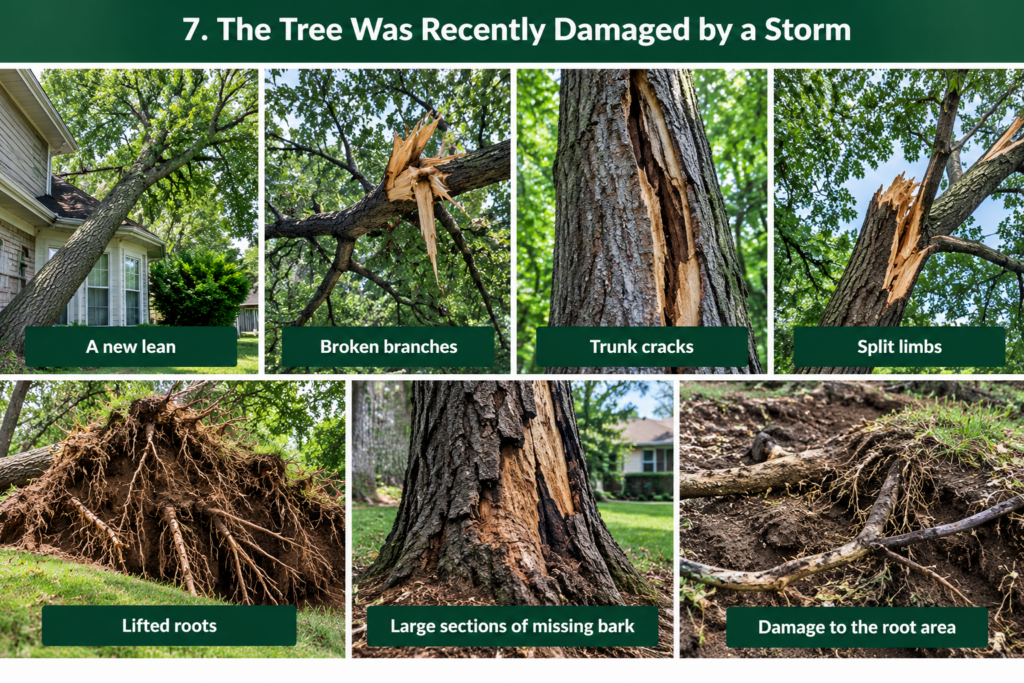
Storm damage can change a tree’s condition quickly.
After strong winds or severe weather, look for:
- A new lean
- Broken branches
- Trunk cracks
- Split limbs
- Lifted roots
- Large sections of missing bark
- Damage to the root area
Trees Atlanta specifically recommends that trees with a new noticeable lean, lifted roots, or cracks in the trunk or large limbs be evaluated by a Certified Arborist as soon as possible.
Remember: storm damage doesn’t automatically mean a tree needs to be removed. Some damaged trees can be preserved with appropriate care. The condition of the individual tree needs to be evaluated.
What Should You Do If a Tree Is Leaning Toward Your House?
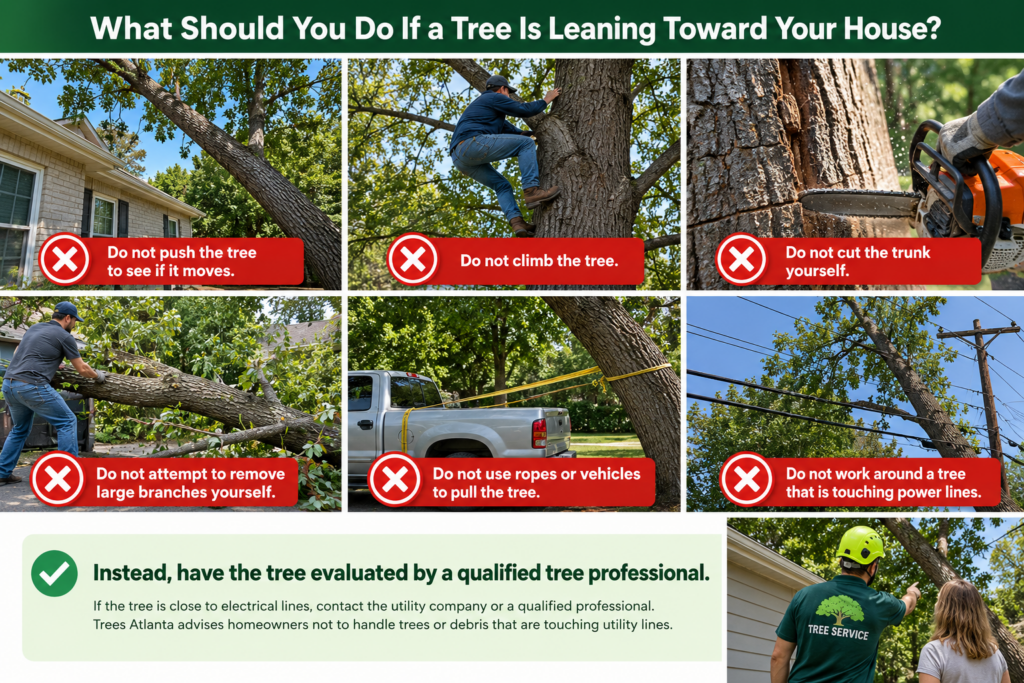
If you’ve noticed a potentially hazardous lean, start by keeping people and pets away from the immediate area.
Do not:
- Push the tree to see if it moves
- Climb the tree
- Cut the trunk yourself
- Attempt to remove large branches
- Use ropes or vehicles to pull the tree
- Work around a tree that is touching power lines
Instead, arrange for the tree to be evaluated by a qualified tree professional.
If the tree is close to electrical lines, contact the utility company or an appropriately qualified professional. Trees Atlanta advises homeowners not to handle trees or debris that are touching utility lines. That depends on the condition of the tree.
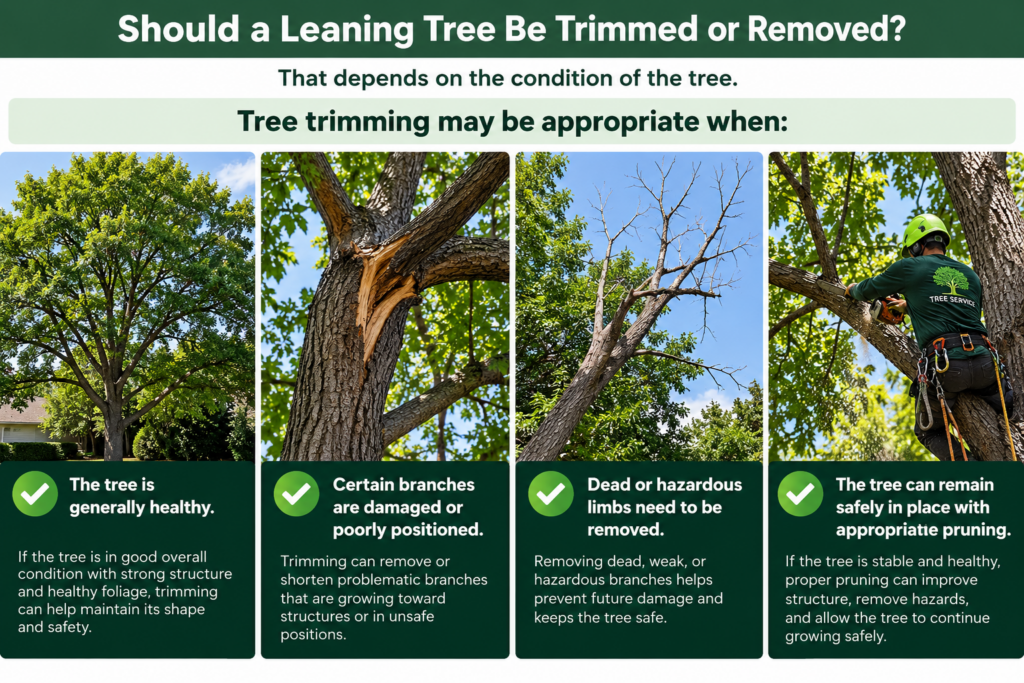
Should a Leaning Tree Be Trimmed or Removed?
.
Tree trimming may be appropriate when:
- The tree is generally healthy
- Certain branches are damaged or poorly positioned
- Dead or hazardous limbs need to be removed
- The tree can remain safely in place with appropriate prunin
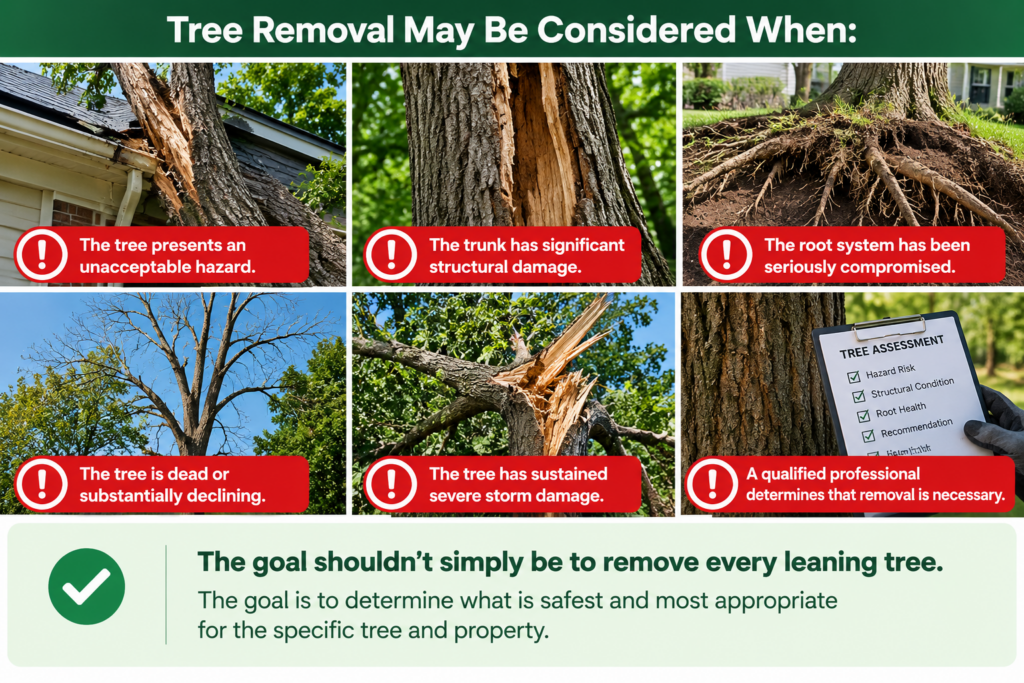
- The tree presents an unacceptable hazard
- The trunk has significant structural damage
- The root system has been seriously compromised
- The tree is dead or substantially declining
- The tree has sustained severe storm damage
- A qualified professional determines that removal is necessary
The goal shouldn’t simply be to remove every leaning tree.
The goal is to determine what is safest and most appropriate for the specific tree and property.
Can You Tell if a Tree Will Fall?
Unfortunately, there is no simple visual test that can guarantee whether or when a tree will fall.
A tree can look healthy and still have structural problems that aren’t obvious from the ground. Likewise, a tree with a slight lean may remain stable for many years.
That’s why professional evaluation is important when you see multiple warning signs.
The combination of the tree’s structure, root condition, soil, location, species, history, recent weather, and surrounding hazards can all matter.
What About a Tree That Has Always Leaned?
If your tree has had the same gradual lean for many years and there are no obvious signs of instability, the situation may be different from a tree that suddenly begins leaning.
Still, proximity matters.
If a mature tree has a long-standing lean directly toward your home, it’s reasonable to have it inspected periodically—particularly if the tree is large or has developed cracks, dead limbs, root damage, or other changes.
A professional can determine whether the tree can safely remain, needs pruning, or requires further evaluation.
What If a Tree Falls During a Storm?
If a tree falls during a storm, stay away from the area until it is safe.
Be especially careful if:
- The tree is touching a power line
- The tree has fallen onto your house
- The trunk is under tension
- Large branches are suspended above the ground
- The root ball has pulled out of the ground
- The structure of the tree is unstable
Do not assume a fallen tree is safe simply because it is already on the ground. Fallen trees and broken limbs can remain under significant tension.
If the tree has damaged your home, take photographs when it is safe to do so and contact your insurance company to understand your coverage and next steps.
Do You Need a Permit to Remove a Tree in Atlanta?
If the property is within the City of Atlanta, don’t assume you can simply remove a tree because it is on your property.
The City of Atlanta has tree-protection requirements, and tree removal can require a permit. The city currently provides a specific application process for removal of dead, dying, or hazardous trees.
The city’s current guidance also states that tree-related professionals must meet registration requirements, and the city updated its Tree Protection Ordinance with changes effective in 2026.
Importantly, tree regulations can vary between municipalities throughout Metro Atlanta.
If you’re outside the City of Atlanta, check the requirements that apply to your specific city or county before starting tree removal.
When in doubt, ask your tree service professional about the permitting process before work begins.
How Atlanta Tree Movers Can Help
If you have a tree leaning toward your home, the first step is understanding why it is leaning and whether it presents a hazard.
Atlanta Tree Movers helps homeowners throughout the Atlanta area with professional tree services, including tree removal and tree trimming.
Whether you’re dealing with a leaning tree, storm damage, dead limbs, or a tree that has become a concern because of its location, getting the situation evaluated Whether you’re dealing with a leaning tree, storm damage, dead limbs, or a tree that has become a concern because of its location, a professional evaluation can help you determine the appropriate next step.
Instead of waiting until a damaged tree becomes an emergency, consider having a professional check it when you first notice a significant change.
Final Thoughts
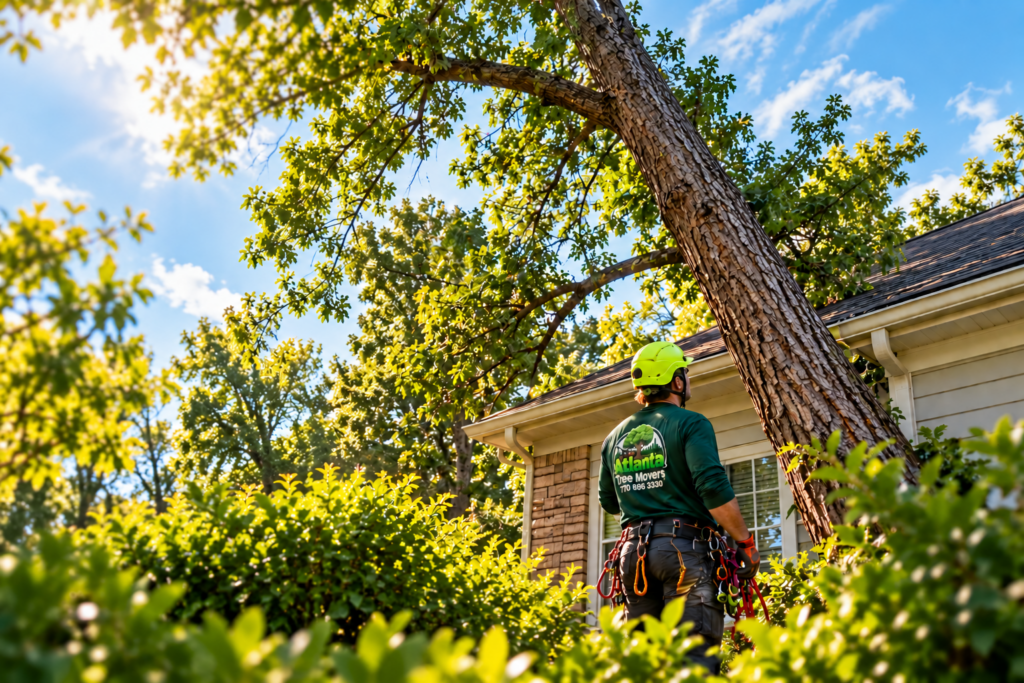
A leaning tree isn’t automatically a dangerous tree.
But a new lean, lifted roots, trunk cracks, damaged major limbs, soil movement, or recent storm damage should not be ignored—especially when the tree is close to your home.
If you’re concerned about a tree on your Atlanta property, keep people away from the area and have the tree evaluated by a qualified professional.
A professional assessment can help determine whether the tree can safely remain, needs pruning, or should be removed.
Have a leaning or potentially hazardous tree on your Atlanta property? Contact Atlanta Tree Movers to discuss your tree service needs and find out what the next step should be.