
A tree can look healthy after a storm and still have structural damage that puts nearby homes, vehicles, and people at risk. Learn how wind, saturated soil, root failure, and hidden trunk damage affect tree stability—and how Atlanta homeowners can respond safely.
When a hurricane or tropical system moves inland, its effects can extend far beyond the coastline. Even after a storm weakens, strong wind gusts, heavy rainfall, and saturated ground can create hazardous conditions for trees across Georgia.
For homeowners in Metro Atlanta, the greatest concern is not always the tree that has already fallen. Sometimes, the more serious risk is a standing tree with damaged roots, cracked wood, or weakened branches that may fail later.
Understanding what happens to trees during severe weather can help property owners recognize potential hazards, make informed decisions, and determine when professional tree care is necessary.
1. Why Trees Fall During Hurricanes and Severe Storms
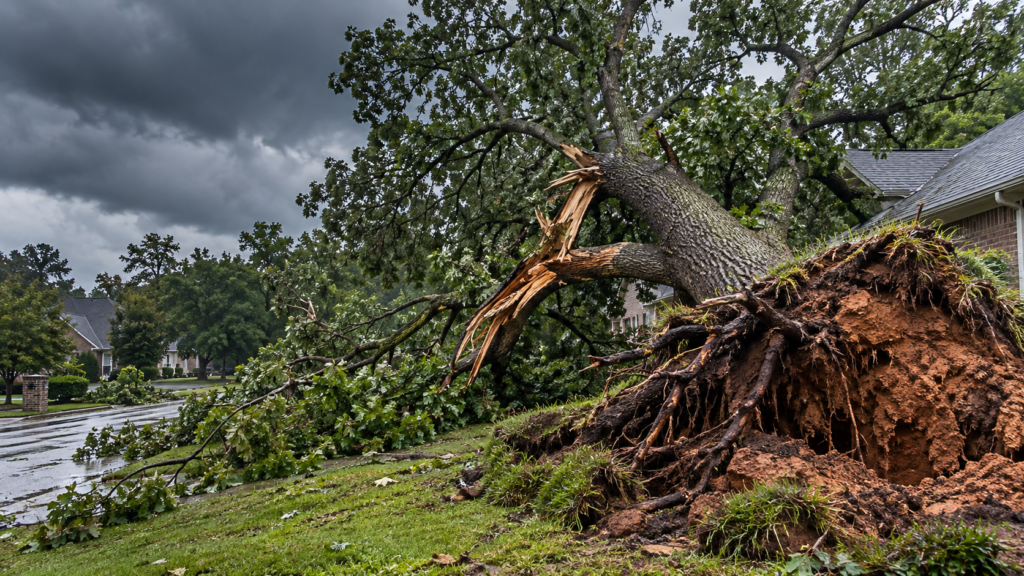
Trees are living structures that constantly respond to wind, gravity, soil conditions, and their surrounding environment. Their stability depends on the relationship between the trunk, branches, root system, and the soil anchoring them.
Three major factors can contribute to storm-related tree failure.
Wind Pressure and Canopy Resistance
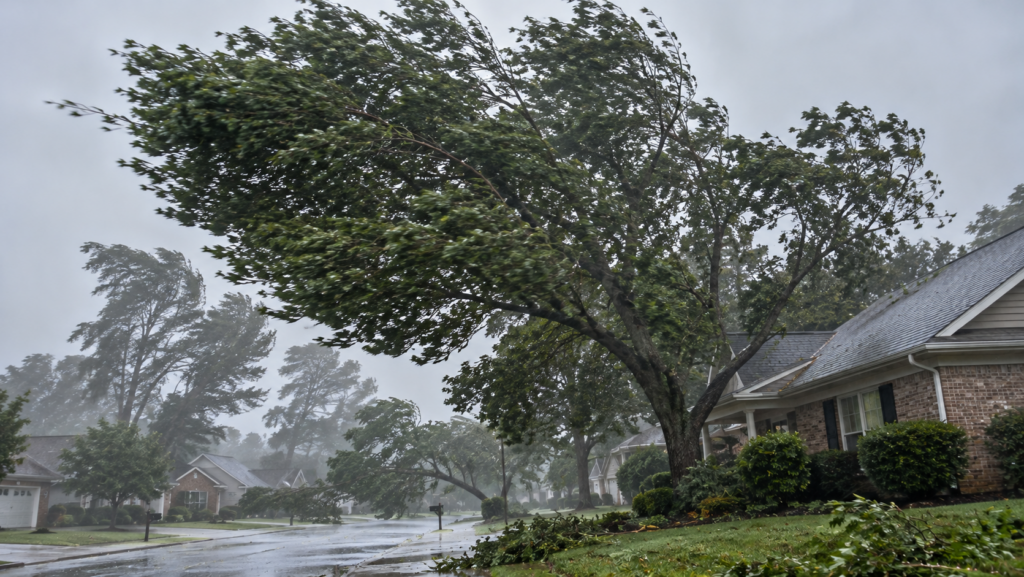
A tree’s canopy acts like a large surface exposed to the wind. As wind speed increases, the force exerted on the canopy can rise significantly. In simplified terms, wind pressure increases approximately with the square of wind speed, meaning that a doubling of wind speed can produce roughly four times the wind pressure under comparable conditions.
This means a tree exposed to wind moving twice as fast may experience roughly four times the wind pressure, assuming other conditions remain comparable.
The actual force depends on canopy density, tree shape, gust patterns, and how air moves through the surrounding landscape.
Dense foliage, long branches, and an unbalanced canopy can influence how a tree responds to strong gusts. However, a large canopy alone does not mean a tree is unsafe. Species, structure, health, and growing conditions all matter.
Saturated Soil and Root Instability
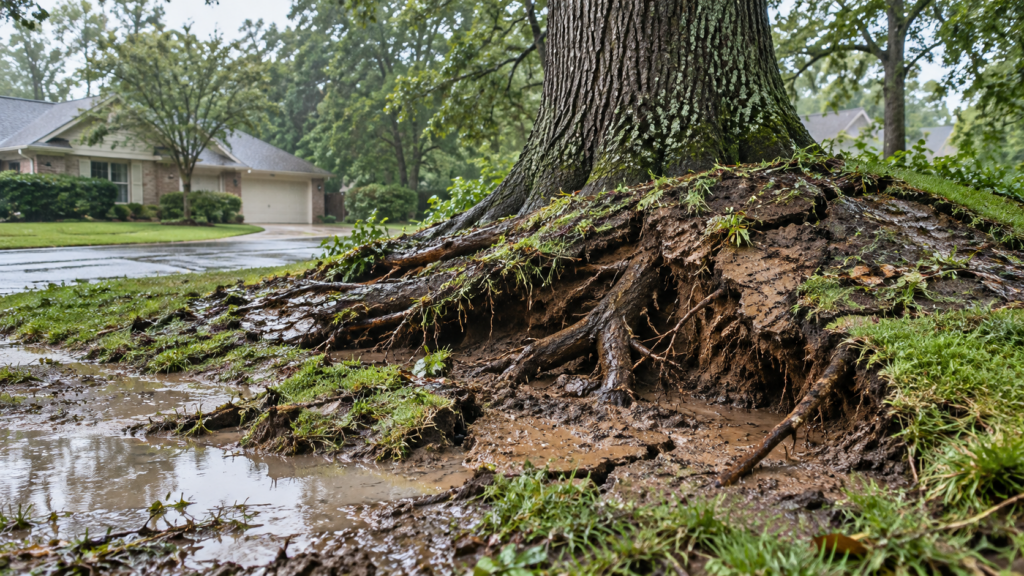
Heavy rainfall can make the ground softer and reduce the soil’s ability to resist the forces acting on a tree’s root system.
When strong winds occur at the same time, the combination can increase the likelihood of uprooting, especially in trees with compromised roots or unfavorable soil conditions.
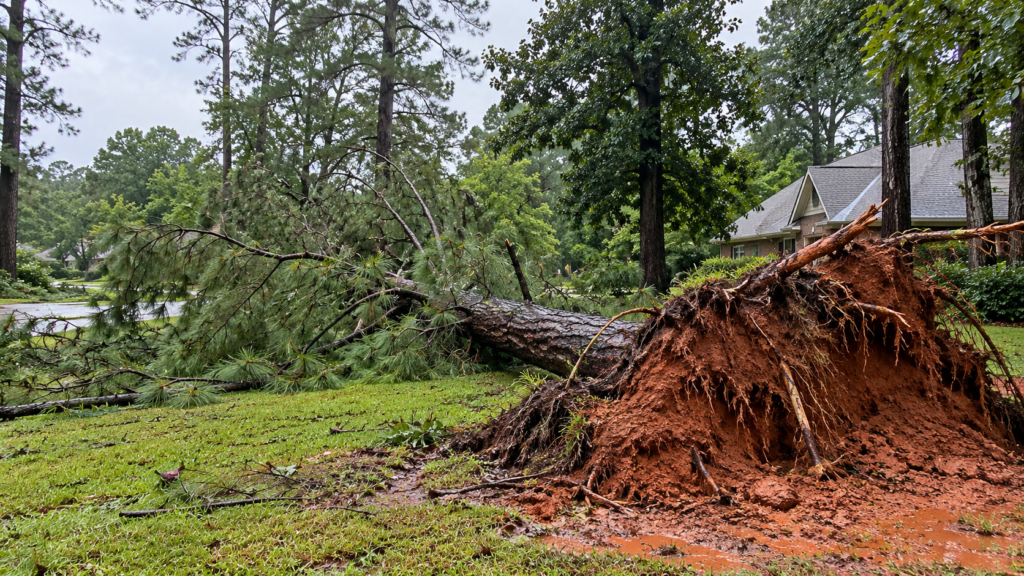
A tree may remain standing even when its root plate has shifted. Raised soil, newly exposed roots, or cracks in the ground around the trunk can indicate that the anchoring system has been disturbed.
These warning signs deserve prompt attention, particularly if the tree is near a house, road, or frequently used outdoor area.
Structural Weakness in Trunks and Branches
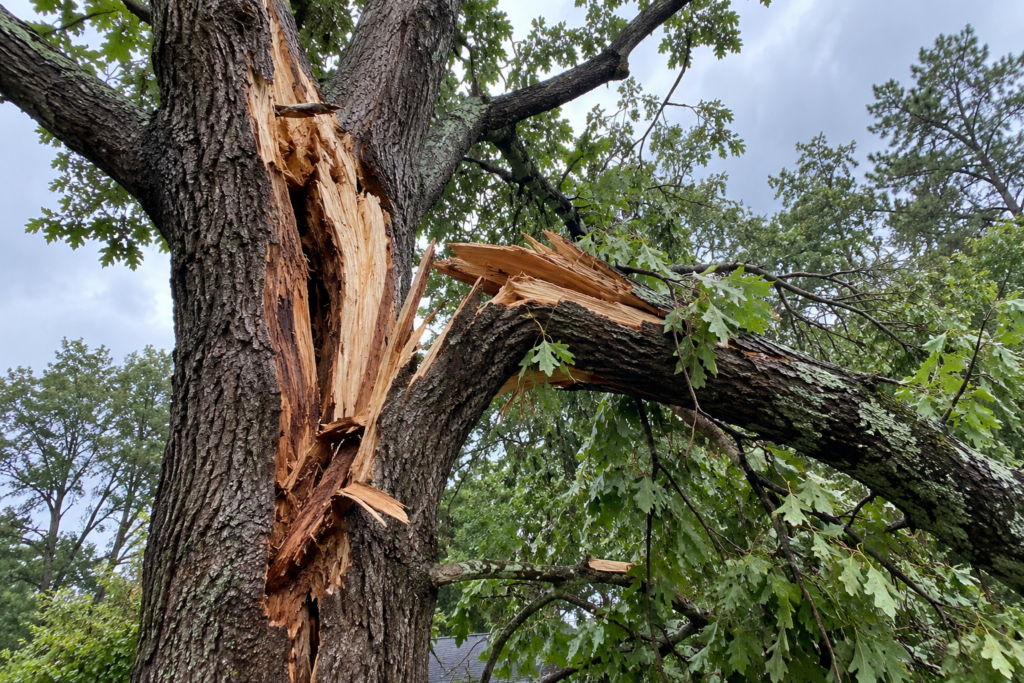
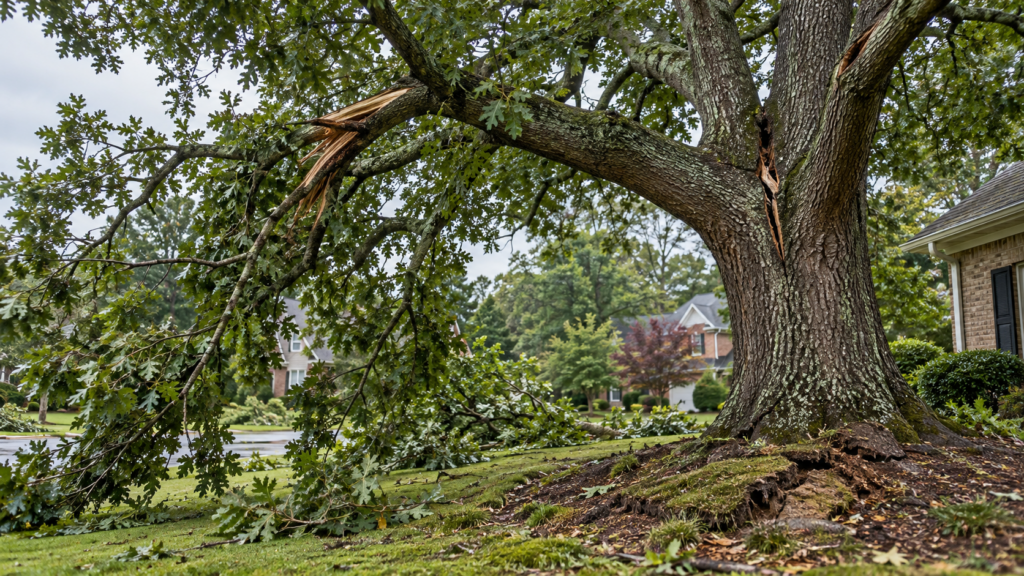
Not every tree failure begins with uprooting. A trunk can split, a major branch can break, or a weakened branch union can separate under stress.
Existing decay, cavities, cracks, deadwood, and poorly attached branches may affect how a tree responds to high winds.
Importantly, a cavity does not automatically mean a tree must be removed. The location and extent of decay, remaining sound wood, loading conditions, and the consequences of failure all influence the assessment.
2. The Hidden Damage Homeowners Often Miss
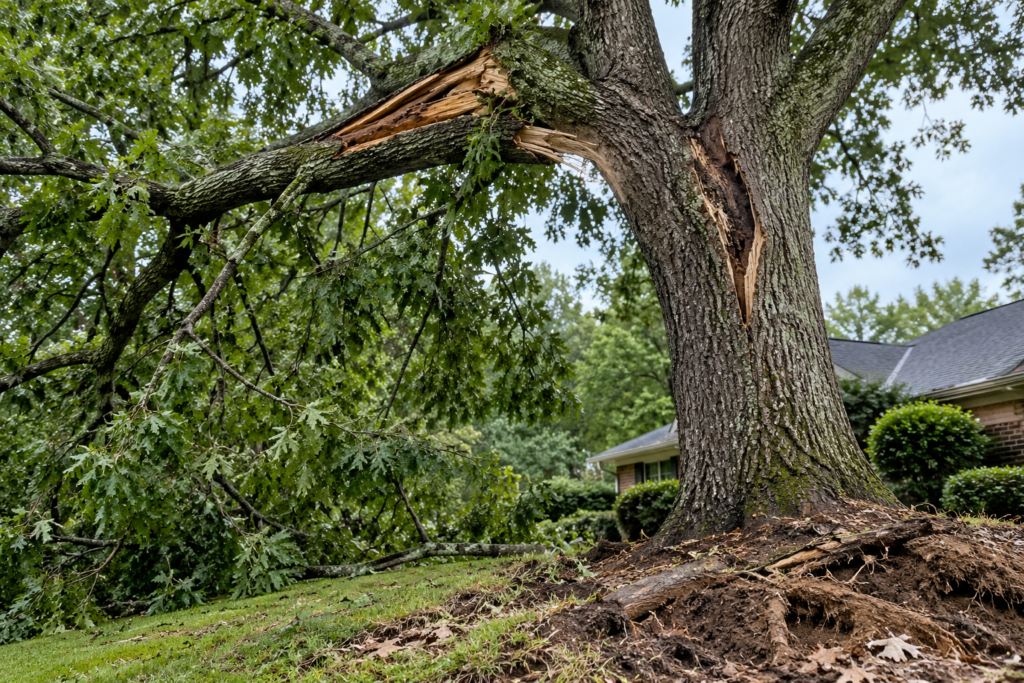
A tree can retain most of its leaves and branches while sustaining damage that is difficult to identify from the ground.
Root damage: A partially displaced root system may not be obvious unless you inspect the soil around the trunk from a safe distance.
Cracks in major limbs: A branch may remain attached after partially splitting, leaving it vulnerable to further movement.
Damaged branch unions: Some branches attach to the trunk at weak junctions. Included bark, where bark becomes trapped between adjoining stems, can contribute to a weak union.
Internal decay: Fungi, cavities, and decayed wood can reduce structural strength, although external symptoms do not always reveal the full extent of internal damage.
Broken branches caught in the canopy: These hanging or suspended limbs may fall later, even when the weather has improved.
A visual inspection from the ground can identify some warning signs, but it cannot reliably determine the full structural condition of every tree.
When substantial damage is suspected, a qualified tree-care professional can assess the situation and recommend appropriate next steps.
3. Why Metro Atlanta Trees Face Different Storm Risks
Metro Atlanta’s landscape includes a variety of tree species, soil conditions, developed properties, and drainage patterns. These differences can influence how individual trees respond to severe weather.
Mature hardwoods
Oaks, maples, and other hardwoods are common in residential landscapes. Their response to storms depends on factors such as species, age, root development, canopy structure, and existing defects.
A mature tree is not automatically hazardous. However, a large tree with structural defects can present serious consequences if a major limb or the entire tree fails near an occupied structure.
Pine trees and exposed root systems
Pines are common throughout Georgia and may be vulnerable to windthrow under certain conditions. Shallow or restricted rooting, saturated soil, root damage, and exposure to strong winds can all influence stability.
Needles turning brown after a storm may indicate stress or damage, but discoloration alone does not establish whether a pine must be removed.
Trees affected by construction and compacted soil
Residential development can change the environment around a tree. Excavation, soil compaction, altered drainage, and damage to roots can reduce a tree’s ability to grow and remain stable.
These problems may develop over years and become more consequential when severe weather places additional stress on the tree.
This is one reason tree assessments should consider not only visible storm damage but also the conditions in which the tree has been growing.
4. Does a Damaged Tree Need Trimming or Complete Removal?
One of the most important questions after a storm is whether a tree can be retained safely.
The answer depends on the type and extent of damage, the tree’s condition, and the potential consequences if it fails.
Tree trimming or pruning may be appropriate when:
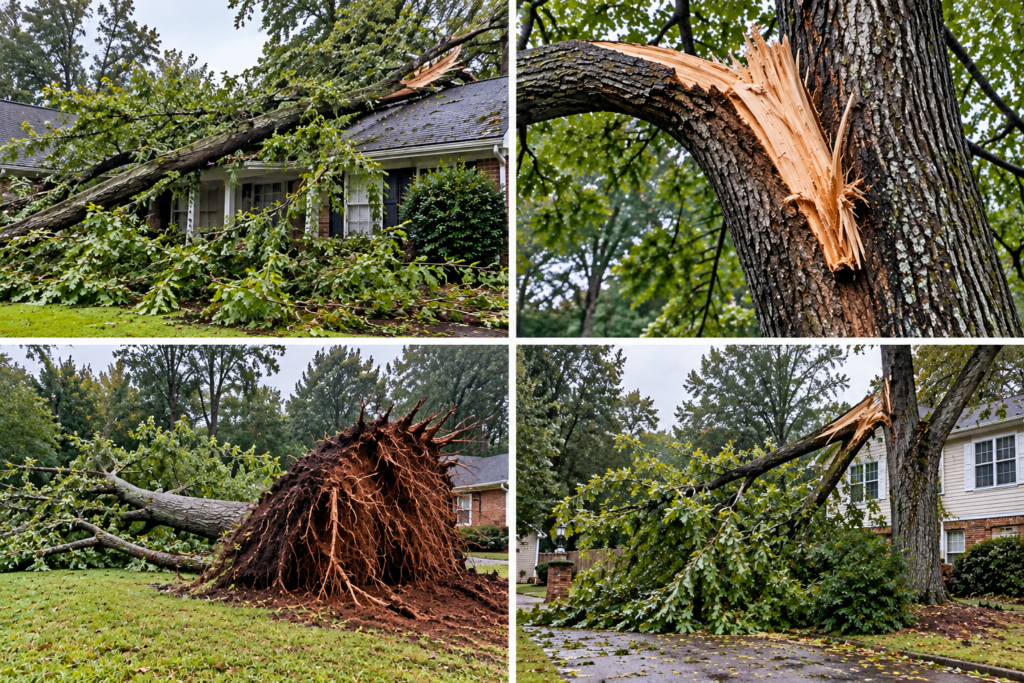
- Damage is limited to branches that can be removed safely.
- The main trunk and root system remain structurally sound.
- The tree has a reasonable prospect of recovery.
- Appropriate pruning can reduce hazards without compromising the tree’s long-term health.
Tree removal may be considered when:
- Severe root failure has compromised stability.
- The trunk has a major structural split.
- Extensive damage makes the tree unsafe to retain.
- The likelihood and consequences of failure cannot be acceptably managed through other measures.
Some trees need additional assessment before a decision can be made. A professional may recommend monitoring, targeted pruning, further inspection, or removal depending on the findings.
The objective is not to remove every tree affected by a storm. It is to identify unacceptable risks while preserving trees that can remain safely in the landscape.
5. What Homeowners Should Do After a Severe Storm
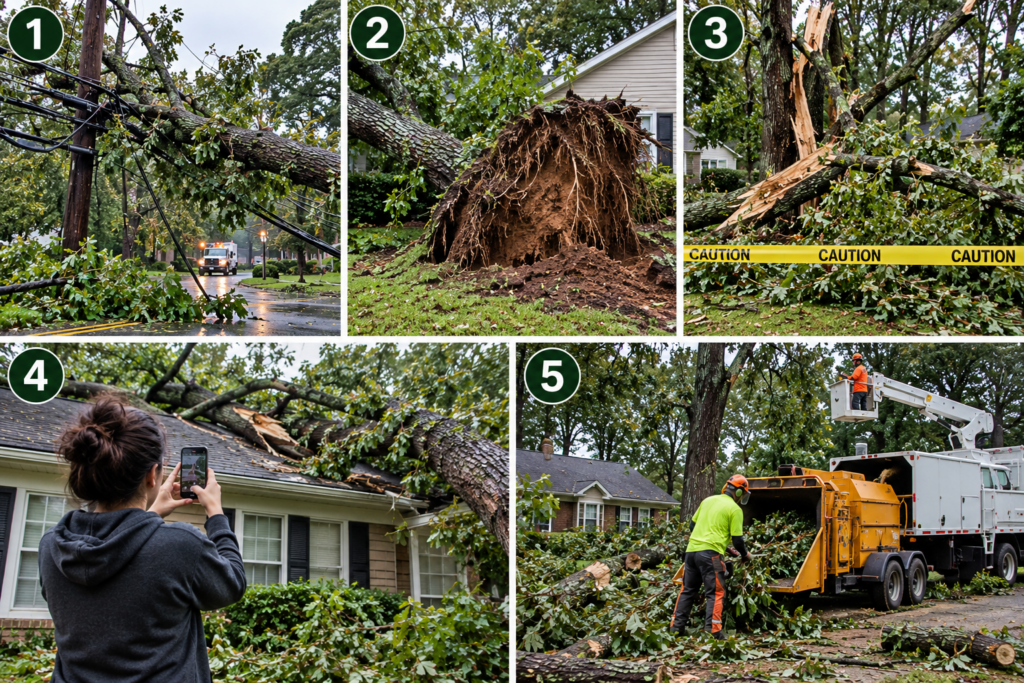
Once conditions are safe, homeowners can take several practical steps.
Step 1: Check for immediate hazards. Stay away from downed power lines, unstable trees, and damaged structures. Contact the utility company if a tree is touching or threatening electrical lines.
Step 2: Look for visible changes. From a safe location, observe whether a tree has developed a new lean, lifted soil, major cracks, or hanging branches.
Step 3: Restrict access to hazardous areas. Keep people and pets away from damaged trees until the risks have been assessed.
Step 4: Document damage. Take photographs from a safe distance for insurance or repair records.
Step 5: Arrange professional assistance. Trees near homes, vehicles, public access areas, and utility lines may require specialized assessment or coordinated removal.
Never attempt to cut a suspended limb, climb a damaged tree, or use a chainsaw on a fallen trunk under tension. Wood can move suddenly as stored forces are released.
If a tree has fallen onto a structure, avoid disturbing it until the situation has been assessed by appropriate professionals.
6. Why Professional Storm Cleanup Requires More Than a Chainsaw
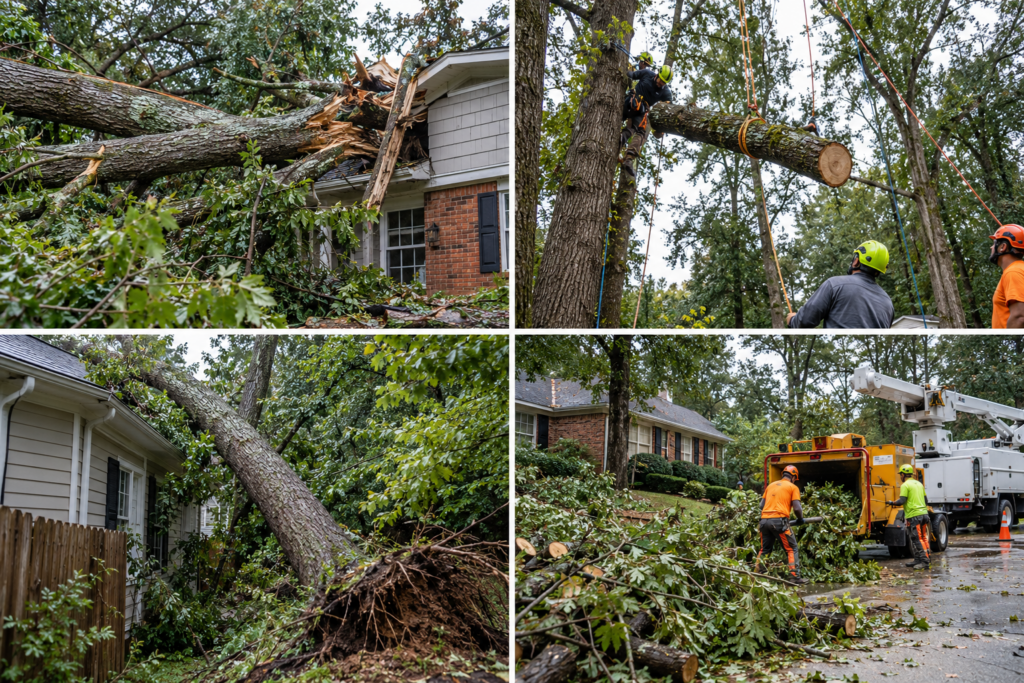
Removing a storm-damaged tree can involve hazards that are not present during routine pruning.
A fallen trunk may be supported by other branches, trapped beneath a structure, or placed under compression and tension. Cutting in the wrong location can cause the wood to shift or spring unexpectedly.
Trees leaning toward buildings may require controlled rigging, specialized equipment, and a carefully planned removal sequence.
Access is another important consideration. A tree located between a home, fence, driveway, and neighboring property may require a different approach from a tree in an open yard.
Professional tree crews evaluate the site, identify potential hazards, and determine an appropriate method for the work. Depending on the conditions, coordination with utility providers or other qualified professionals may also be necessary.
For homeowners, the key is to avoid treating a hazardous tree as a simple cleanup project.
7. How Atlanta Tree Movers Can Help After a Storm
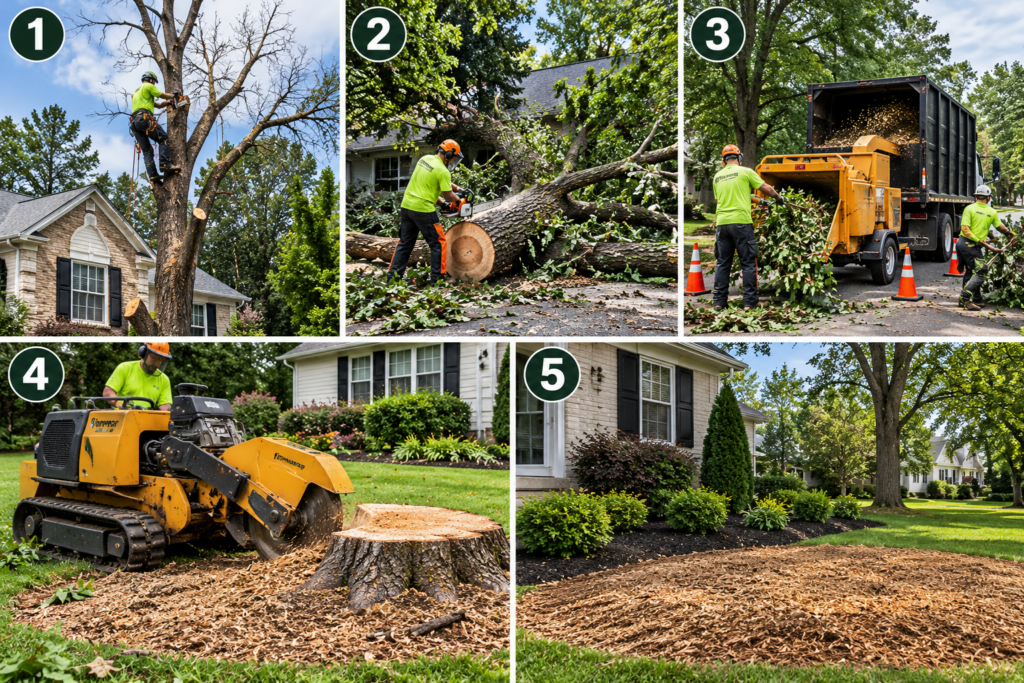
Storm damage can leave homeowners facing several questions: Is the tree safe to keep? Can the damaged branches be removed? Does the fallen tree need to be cleared? Is the remaining stump interfering with the yard?
Atlanta Tree Movers serves property owners throughout Metro Atlanta with tree-related services that can help address these concerns.
Tree removal: For trees that need to be taken down because of their condition, location, or safety concerns.
Tree trimming and pruning: To address appropriate branch damage and other pruning needs.
Storm cleanup: To help clear fallen trees and storm-related tree debris.
Stump grinding: To address remaining stumps after tree removal and prepare the area for future landscaping.
Every property presents different conditions. The appropriate service depends on the extent of damage, accessibility, nearby structures, and the tree’s overall condition.
If you are concerned about a tree following a severe storm, contact Atlanta Tree Movers to discuss your property and request a free estimate.
8. Preparing Your Trees Before the Next Storm
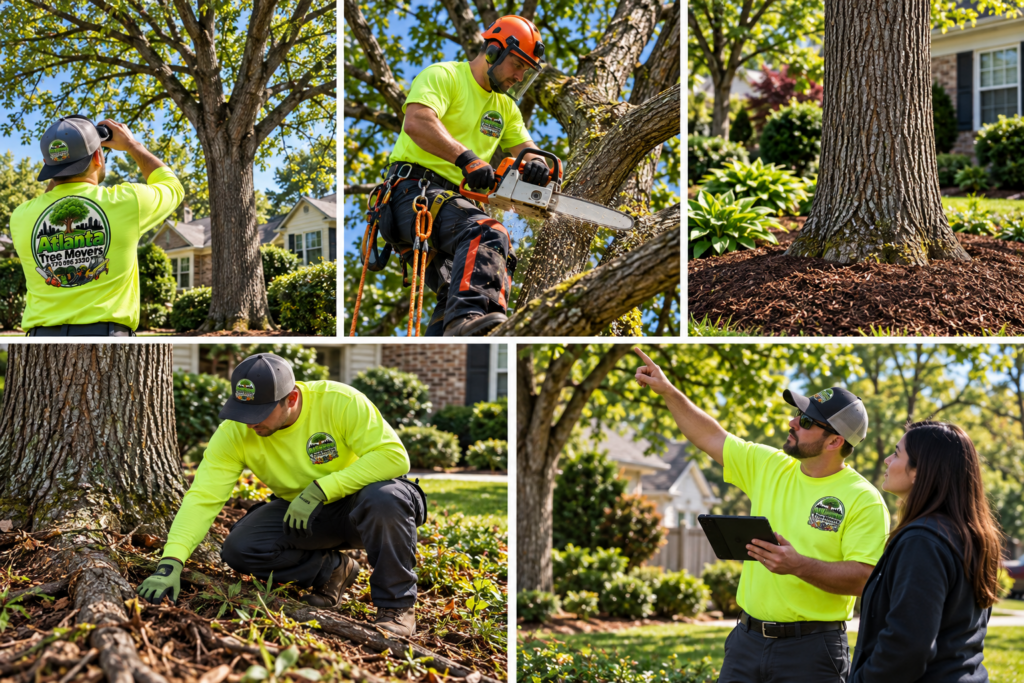
Storm preparation starts long before severe weather appears in the forecast.
Routine inspections can help identify deadwood, structural defects, root-zone disturbance, and other concerns that may warrant attention.
Appropriate pruning can remove certain hazards, while protecting root zones during construction can help preserve tree health. Maintaining suitable drainage and avoiding unnecessary soil disturbance can also support healthy growing conditions.
However, no pruning method or maintenance program can guarantee that a tree will withstand hurricane-force winds.
The goal is to make informed decisions about tree health and foreseeable risks—not to promise that a tree is storm-proof.
Homeowners who have concerns about mature trees near their homes should consider arranging an assessment before the next severe-weather season.
Protect Your Property With Informed Tree Care
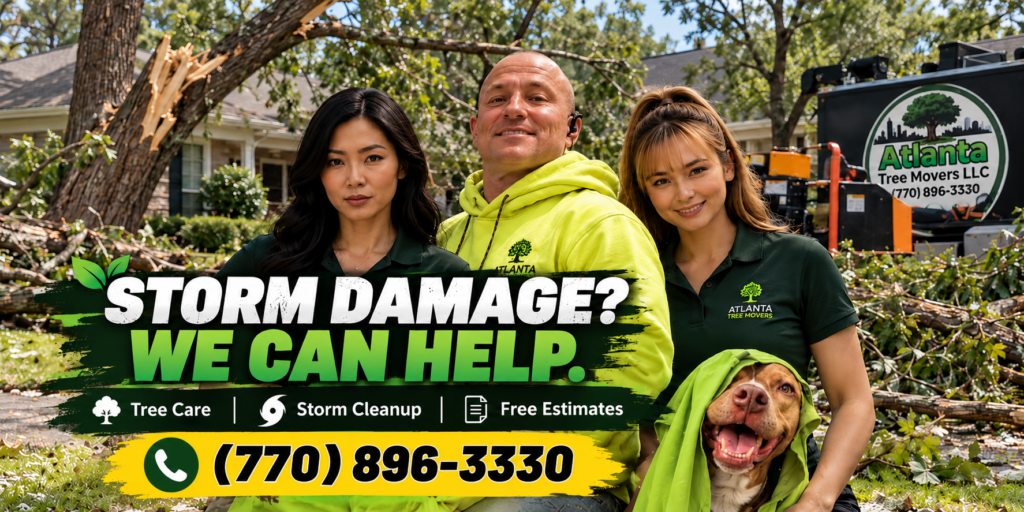
After a hurricane or severe storm, a tree that remains standing is not necessarily undamaged. Root disturbance, structural cracks, and broken branches can create hazards that deserve careful attention.
Knowing what to look for—and understanding when not to approach a damaged tree—can help homeowners make safer decisions.
Atlanta Tree Movers provides tree removal, tree trimming, stump grinding, and storm cleanup services throughout Metro Atlanta.
Have a storm-damaged tree or fallen branches on your property? Contact Atlanta Tree Movers to discuss your needs and request a free estimate.
Safety reminder: Stay away from trees touching power lines and contact the utility company. If there is an immediate threat to life, call emergency services.