
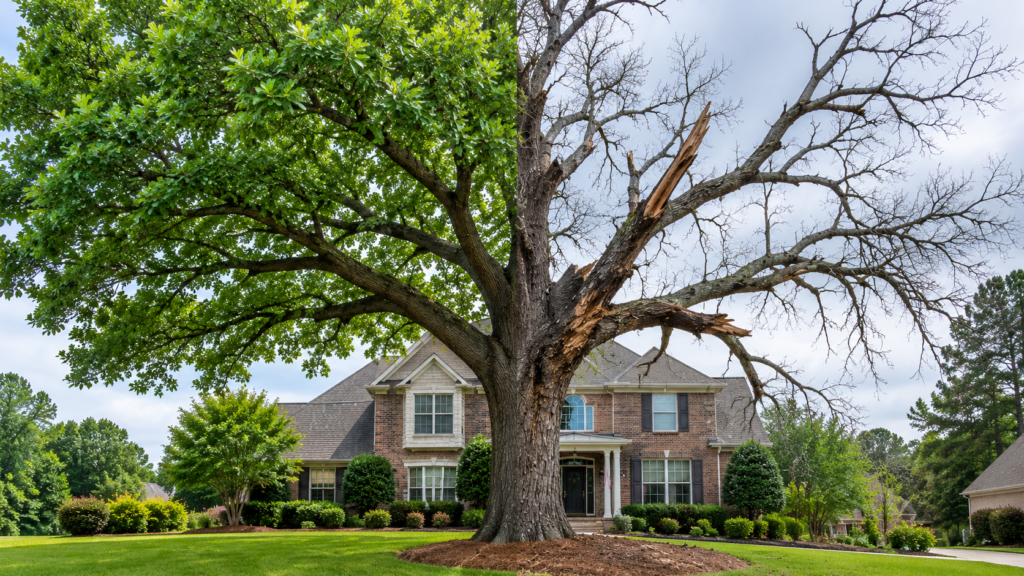
Deciding between tree trimming vs tree removal is one of the most common questions Atlanta homeowners face, and getting it wrong is expensive either way. Cut down a tree that only needed a good pruning, and you have lost decades of growth, shade, and property value — and inside city limits, you may owe recompense fees on top of the removal cost. Leave a dying tree standing, however, and you are gambling with your roof, your car, and possibly someone’s safety.
The good news is that trees give clear signals. Once you know what to look for, the choice usually becomes obvious. This guide walks through the warning signs for each option, the professional tests arborists use, realistic cost expectations, and the point at which you should stop guessing and call a certified expert.
What Is Tree Trimming?
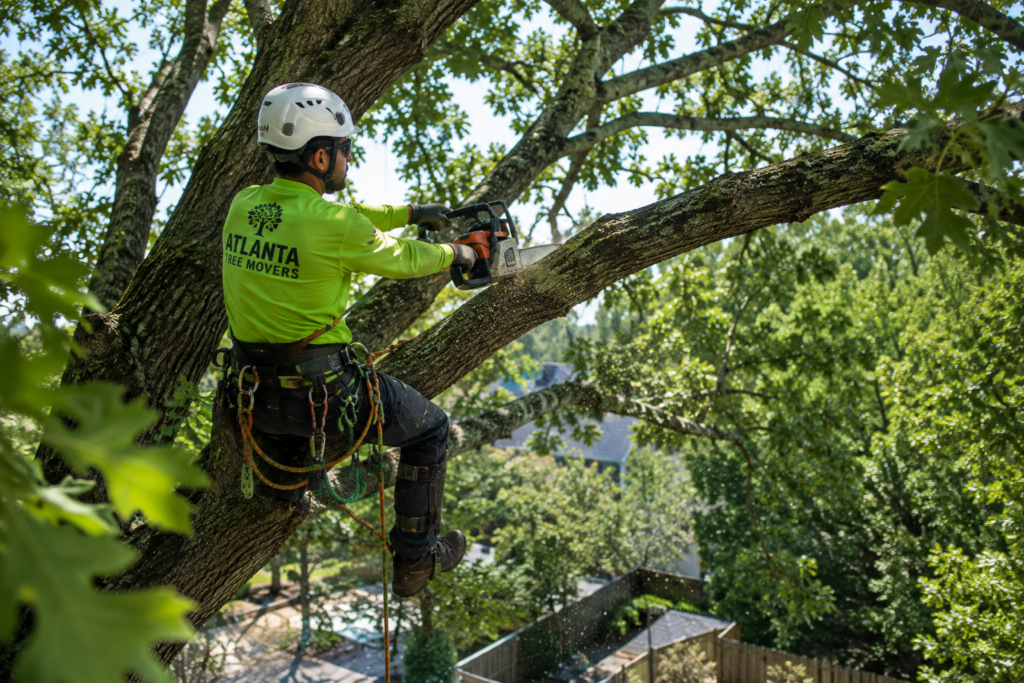
Tree trimming is the selective removal of branches to improve a tree’s health, shape, safety, and appearance. Arborists often use “pruning” and “trimming” interchangeably, though pruning tends to focus on the tree’s biological health while trimming leans toward aesthetics and clearance.
Either way, the goal is the same: keep the tree alive and improve it.
Common Types of Trimming
- Crown cleaning — removing dead, diseased, or broken branches
- Crown thinning — selectively reducing density so light and air move through
- Crown raising — lifting the lower canopy for clearance over walkways, driveways, or rooflines
- Crown reduction — shortening the overall height or spread without topping
- Deadwooding — stripping out lifeless limbs that could drop without warning
Signs Your Tree Needs Trimming
Reach for trimming when the tree itself is fundamentally sound but its branches are causing problems:
- Branches touch or overhang your roof, gutters, or siding
- Limbs block sidewalks, driveways, or street signs
- Dead or broken branches hang in the canopy after a storm
- The canopy has grown so dense that grass beneath it struggles
- Branches grow toward power lines (call your utility company — never do this yourself)
- The tree looks lopsided or top-heavy
- Fruit or flower production has dropped off
- Suckers and water sprouts crowd the base and trunk
Benefits of Regular Trimming
Consistent trimming pays for itself over time. It reduces storm damage risk by eliminating weak limbs before high winds find them. It improves airflow through the canopy, which discourages fungal disease. It also directs the tree’s energy into strong, well-placed growth instead of crowded or crossing branches.
Furthermore, a well-maintained mature tree measurably increases curb appeal and property value — something a stump never does.
What Is Tree Removal?
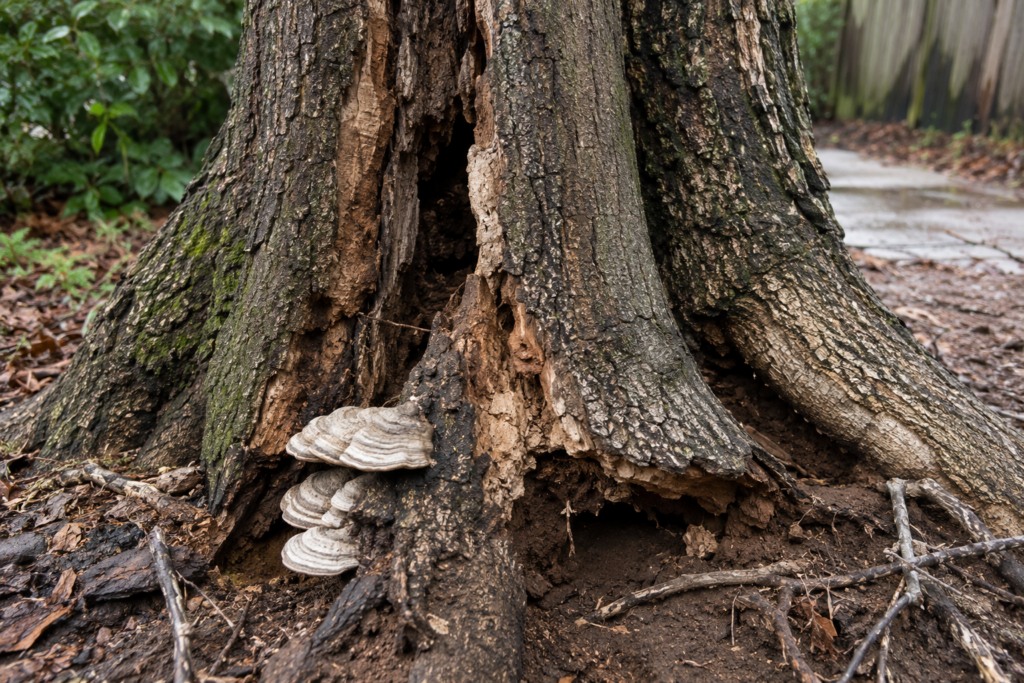
Tree removal is the complete extraction of a tree, typically including the trunk, major limbs, and often the stump. Crews may take the tree down in sections when space is tight, or fell it in one piece when there is a clear drop zone.
Removal is permanent, so treat it as a last resort. That said, delaying a necessary removal is far riskier than doing it promptly.
Signs Your Tree Needs Removal
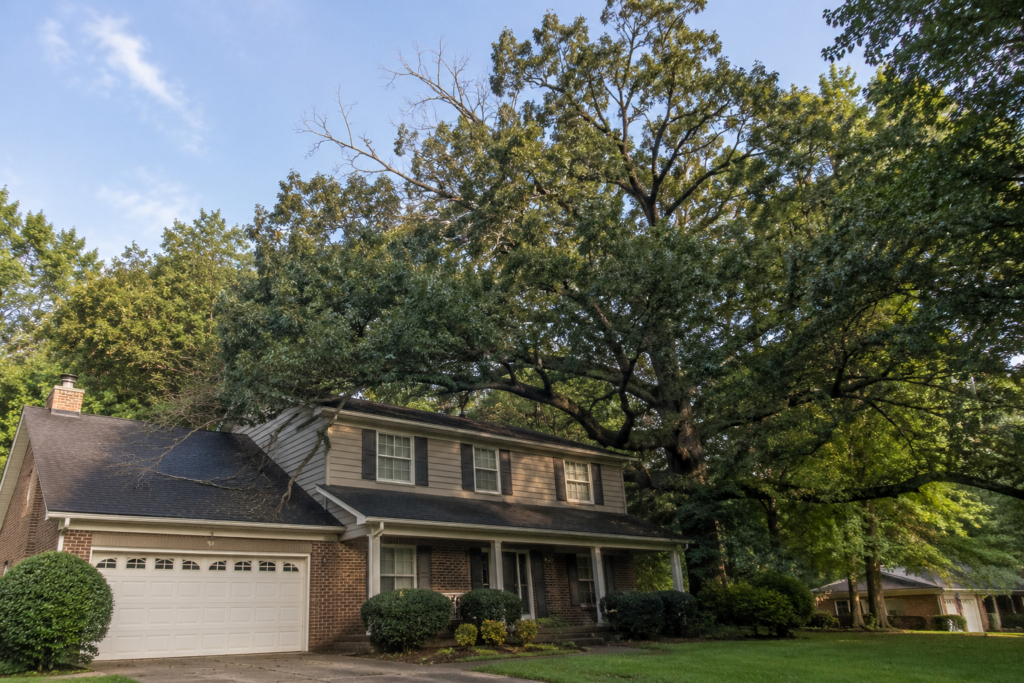
Consider removal when the problem lives in the trunk, roots, or overall structure rather than in a few branches:
- The tree is dead or mostly dead. Scratch a small twig — green underneath means life, brown and brittle means trouble.
- Extensive trunk damage. Deep cracks, seams, large cavities, or missing bark across a wide section signal structural failure.
- The tree is leaning suddenly or severely. A lean over 15 degrees, especially a new one, often means root failure.
- Heaving soil or exposed roots at the base. Ground lifting on one side is a classic warning of an imminent fall.
- Mushrooms or conks growing at the base or on the trunk. Fungal fruiting bodies frequently indicate advanced internal decay.
- Major root damage from construction or trenching. Trees rarely recover once a large share of the root plate is severed.
- Advanced pest infestation. Emerald ash borer, bark beetles, and similar pests can be fatal once established.
- The tree is simply in the wrong place. Species planted too close to foundations, septic systems, or power infrastructure eventually become liabilities.
- Repeated large-limb failures. A tree that keeps dropping heavy branches is telling you something.
The Safety Factor
One point deserves emphasis. If a tree could hit a house, a vehicle, a play area, or a neighbor’s property when it fails, the risk calculation changes completely. A declining tree in the middle of an open field may be worth monitoring for years. The same tree twelve feet from a bedroom window is not.
Tree Trimming vs Tree Removal: Side-by-Side Comparison
| Factor | Tree Trimming | Tree Removal |
|---|---|---|
| Purpose | Improve health, shape, safety | Eliminate hazard or dead tree |
| Tree condition | Structurally sound | Dead, dying, or unstable |
| Reversible | Yes — tree keeps growing | No — permanent |
| Typical frequency | Every 3–5 years | Once |
| Relative cost | Lower | Higher |
| Permit needed | Rarely | Often, depending on locality |
| Property value | Usually increases it | Usually decreases it |
| Best timing | Late dormant season | Any time; urgent if hazardous |
| Stump left behind | None | Yes, unless grinding is included |
| Cleanup required | Light | Extensive |
How to Decide: Professional Tests You Can Apply
Arborists rely on a few practical benchmarks. None is definitive on its own, but together they paint a reliable picture.
The 50% Rule
If more than half the tree is dead, damaged, or diseased, removal is typically the right call. A tree that has lost most of its living canopy generally cannot generate enough energy to recover, and every season it declines further while the hazard grows.
The Trunk Damage Test
Examine the trunk’s circumference. When damage — cavities, cracks, missing bark, or decay — spans more than 25% of the way around, the tree’s structural integrity is seriously compromised. Above 50%, removal is almost always warranted.
The Scratch Test
Scratch a small patch of bark on several twigs across different parts of the canopy. Green, moist tissue underneath means that section is alive. Brown and dry means it is not. Sample widely, because one dead branch is normal while widespread brown tissue is not.
The Lean Assessment
A tree that has always leaned may be perfectly stable. A tree that leans suddenly, or shows fresh soil cracking and root heaving on the opposite side, is failing right now. Treat that as an emergency.
The Location Question
Finally, ask what the tree would hit. Combine that answer with the tests above and the decision usually resolves itself.
Cost Expectations
Pricing varies widely by tree size, species, access difficulty, and proximity to structures, so any number you find online is a rough guide at best. The only accurate figure comes from someone looking at your actual tree.
Tree trimming generally runs from a modest fee for a small ornamental up to several hundred dollars for a large mature hardwood requiring a bucket truck and climbing crew.
Tree removal typically costs two to four times more than trimming the same tree. Height, trunk diameter, proximity to structures, and power line involvement drive the price. Additional charges commonly apply for:
- Stump grinding or full stump removal
- Emergency or after-hours response
- Crane assistance for tight or hazardous locations
- Hauling and disposal of debris
- Permit filing on your behalf
Inside Atlanta city limits, remember to factor in recompense, which is assessed on top of the removal price when a permitted tree comes down.
The takeaway: trimming a healthy tree consistently costs far less over its lifetime than removing a neglected one — and you keep the tree, the shade, and the property value.
Atlanta Tree Removal Permits: What Homeowners Must Know
This is where the trimming decision gets a lot more attractive inside the city. Atlanta enforces one of the strictest tree protection ordinances in the Southeast, and homeowners are frequently caught off guard by it.
When You Need a Permit
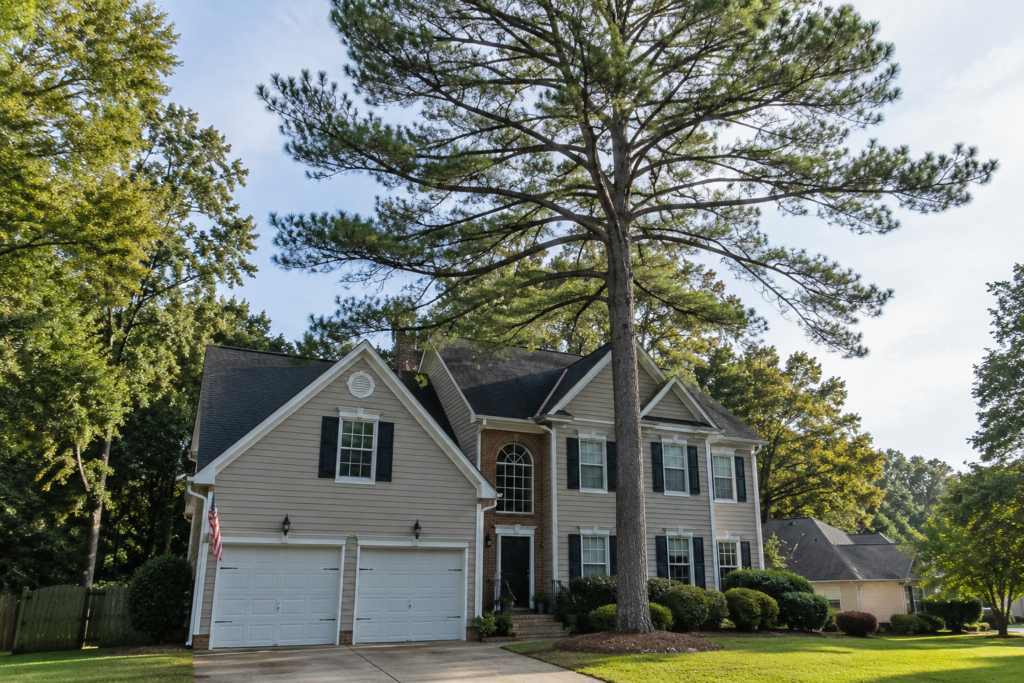
- Hardwoods 6 inches DBH or larger require a removal permit — DBH means diameter measured 4.5 feet above the ground
- Pines are held to a larger threshold under current city guidance, but confirm before cutting
- Any tree on public property or in the right-of-way requires a permit regardless of size
- Dead and diseased trees are not automatically exempt. This surprises most homeowners — a dead tree still generally requires a permit unless it qualifies as an imminent hazard
Good news on the trimming side: pruning trees on private property does not require a permit. The ordinance does set pruning standards, though — including a prohibition on climbing with spikes, which is one reason hiring a crew that knows the rules matters.
What Unpermitted Removal Costs
The city assesses recompense using a per-tree plus per-inch formula, so a single large hardwood taken down without a permit can generate a bill that dwarfs what the removal itself cost — before any fine is added. Recompense goes into the city’s Tree Trust Fund.
Emergencies and Imminent Hazards
If a tree presents an immediate danger to life or property, you may act to protect people first. Document everything with photos before and during the work, notify the city, and file the after-the-fact permit promptly — the window is short. If the city later decides the hazard was not imminent, recompense and fines can still apply, so photographic evidence is your protection.
Outside City Limits
Rules change at the city line. Gwinnett, DeKalb, Fulton, and individual municipalities such as Norcross, Duluth, Brookhaven, and Dunwoody each set their own tree ordinances, and requirements vary considerably. Homeowners’ associations frequently layer on additional restrictions of their own.
Requirements also change over time — the City of Atlanta has amended its permitting process in recent years, including adding a pre-application arborist meeting for projects affecting trees. Always verify current requirements with the relevant jurisdiction before work begins. We provide permit assistance and will tell you upfront whether your tree needs one.
Verify current City of Atlanta requirements with the Arborist Division before any removal.
Getting a Professional Assessment
You do not need a formal report to answer most trimming-versus-removal questions. An experienced estimator can walk your property, look at the trunk, the root flare, the canopy, and what the tree threatens, and give you a straight recommendation with a written price — usually at no charge.
That said, a handful of situations genuinely warrant a written evaluation from an ISA Certified Arborist, which is a separate professional credential from the tree service that performs the work:
- Legal disputes with a neighbor over a boundary or shared tree
- Insurance claims that require documented professional evaluation
- Permit appeals, or a case that a protected tree is genuinely hazardous
- Construction planning inside a protected root zone
- High-value specimen trees where an expensive treatment plan is on the table
For everything else — storm damage, dead trees, overgrown canopies, clearance problems, hazardous limbs — a licensed and insured tree service with an experienced crew is exactly what the job calls for.
What to Verify Before You Hire Anyone
- Current liability insurance and workers’ compensation. Ask for certificates, not verbal assurance. If an uninsured worker is injured on your property, you may be the one holding the liability.
- A written, itemized estimate covering the work, the cleanup, and how the stump will be handled.
- A clear answer on permits — who files, and who pays if one turns out to be required.
- An established local track record with a physical business address and verifiable reviews.
- Sound pruning practices. Reputable crews do not top trees or climb with spikes on trees meant to survive.
The Georgia Forestry Commission publishes homeowner guidance on tree care and storm recovery, and the International Society of Arboriculture maintains a public directory if you need to locate a certified arborist for one of the situations above.
Why DIY Is Rarely Worth It
Tree work ranks among the most dangerous jobs in the country. Chainsaws, ladders, unpredictable falling weight, and overhead power lines combine badly.
Handle small pruning within arm’s reach from the ground if you like. Beyond that — anything requiring a ladder, anything near utility lines, anything over your head — hire a licensed and insured crew. Branches growing toward power lines are never a homeowner job; call your utility company.
Frequently Asked Questions
Can a Leaning Tree Be Saved?
Sometimes. A tree that has leaned consistently for years and shows no soil disturbance is often stable. A tree that begins leaning suddenly, or shows heaving soil and exposed roots, is failing and needs immediate professional assessment.
What Is the Best Time of Year for Tree Trimming?
Late dormant season — winter into very early spring — is ideal for most species. The tree is not actively growing, the structure is visible without leaves, and disease pressure is lower. Dead or hazardous limbs, however, should come down whenever you find them.
Will Removing a Tree Damage My Foundation?
Removal itself rarely does. However, soil that has been dried by a large tree’s roots for decades can re-saturate and swell afterward, which occasionally causes settlement in clay-heavy soils. Mention nearby structures when you get an estimate.
Should I Grind the Stump?
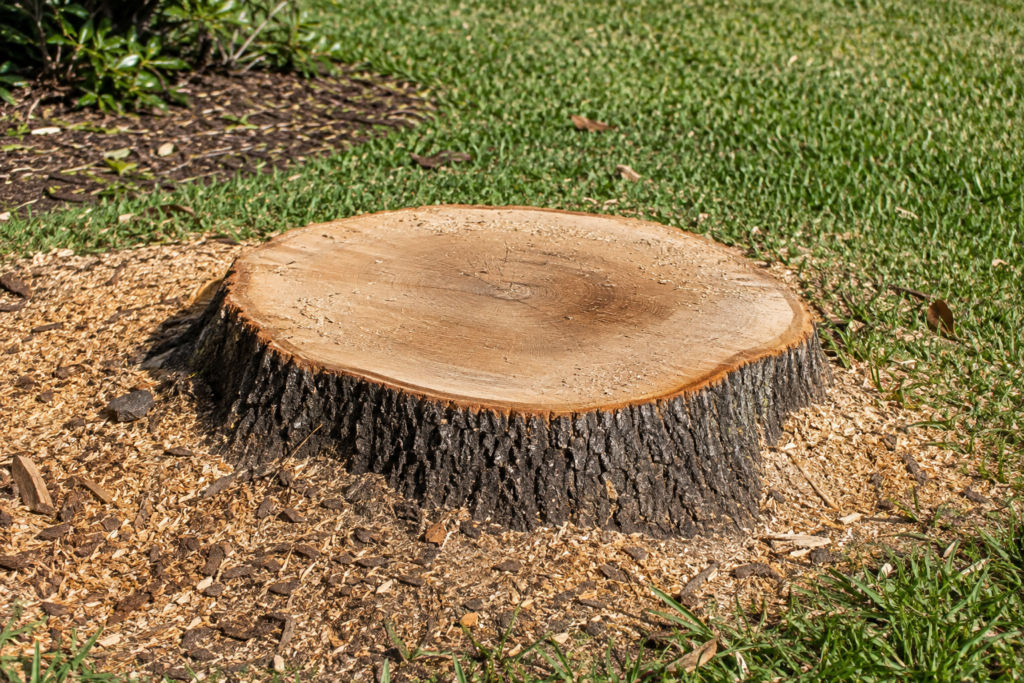
Grind it if you plan to replant, mow, or landscape the area. Leaving a stump invites pests, fungal growth, and persistent suckering. Grinding is typically priced separately from removal.
Can Trimming Save a Dying Tree?
Occasionally. Removing diseased limbs early can halt the spread and give a stressed tree a chance to recover. Once decline is advanced — past the 50% threshold — trimming only delays the inevitable while the hazard continues to grow.
How Often Should Mature Trees Be Trimmed?
Most mature shade trees benefit from a professional assessment every three to five years. Fruit trees and fast-growing species often need annual attention.
The Bottom Line: Tree Trimming vs Tree Removal
Choosing between tree trimming vs tree removal comes down to one question: is the problem in the branches, or in the tree itself? Branch-level issues — overhang, deadwood, crowding, poor shape — call for trimming. Trunk, root, and whole-structure problems call for removal.
When you genuinely cannot tell, get a certified arborist to look. A diagnostic assessment costs a fraction of an emergency removal, and considerably less than repairing a roof.
Not Sure Which One Your Tree Needs?
Atlanta Tree Movers has served Atlanta and the greater metro since our start in Norcross, and we will tell you honestly when a tree can be saved. We are licensed and insured, we follow industry-recommended practices and Georgia Forestry Commission safety guidance, and our estimates are always free.
- Free, no-obligation on-site estimates
- Permit assistance so you stay compliant
- Tree removal, trimming, stump grinding, and storm cleanup
- 24-hour emergency service
- Free firewood and woodchips when available
Call (770) 896-3330 — or text photos of your tree to (678) 829-2244 for the fastest response.
Request your free estimate here
Serving Norcross, Atlanta, Lilburn, Duluth, Brookhaven, Chamblee, Stone Mountain, Dunwoody, Sugar Hill, Lawrenceville, Alpharetta, Cumming, Gainesville, Snellville, Suwanee, Buford, Canton, Conyers, Johns Creek, Lithonia, Winder, Bethlehem, and surrounding areas.