
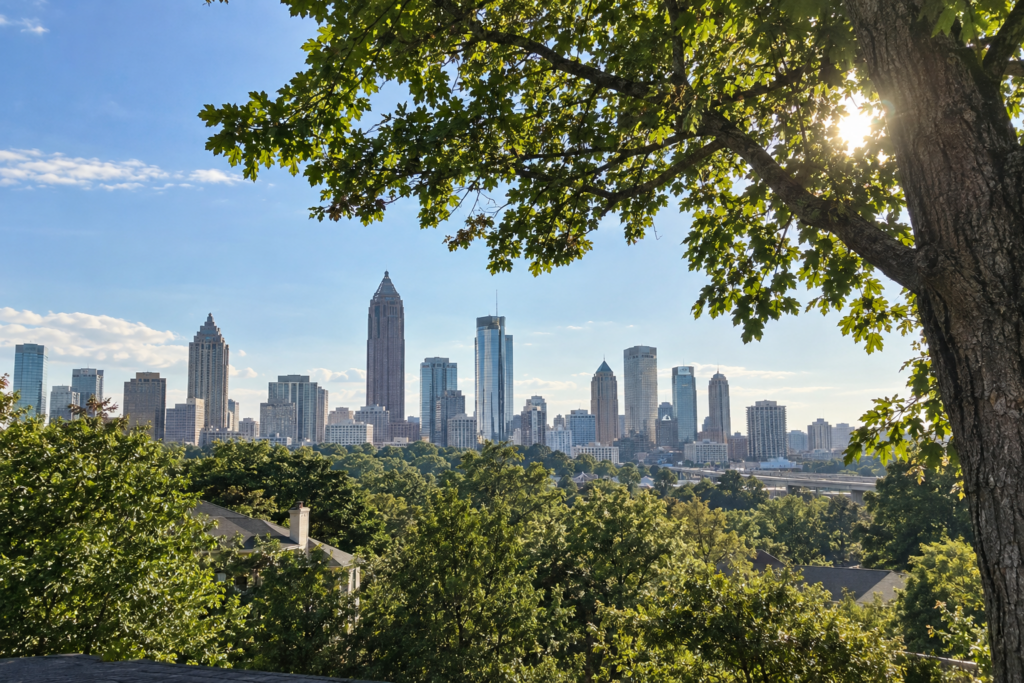
Tree removal in Atlanta isn’t always as simple as cutting down a tree. Depending on the tree, property, location, and circumstances, homeowners may need to follow specific city requirements before work begins. Knowing the rules ahead of time can help you avoid delays and unexpected problems.
Thinking about removing a tree from your Atlanta property?
Before you start cutting, it’s important to understand that tree removal in the City of Atlanta can involve local requirements, permits, and arborist review, depending on the tree and the reason for removal.
Atlanta’s updated Tree Protection Ordinance took effect January 1, 2026, so homeowners should make sure they understand the current rules before scheduling tree work.
Here’s what Atlanta homeowners should know before removing a tree in 2026.
1. Not Every Tree Can Simply Be Removed
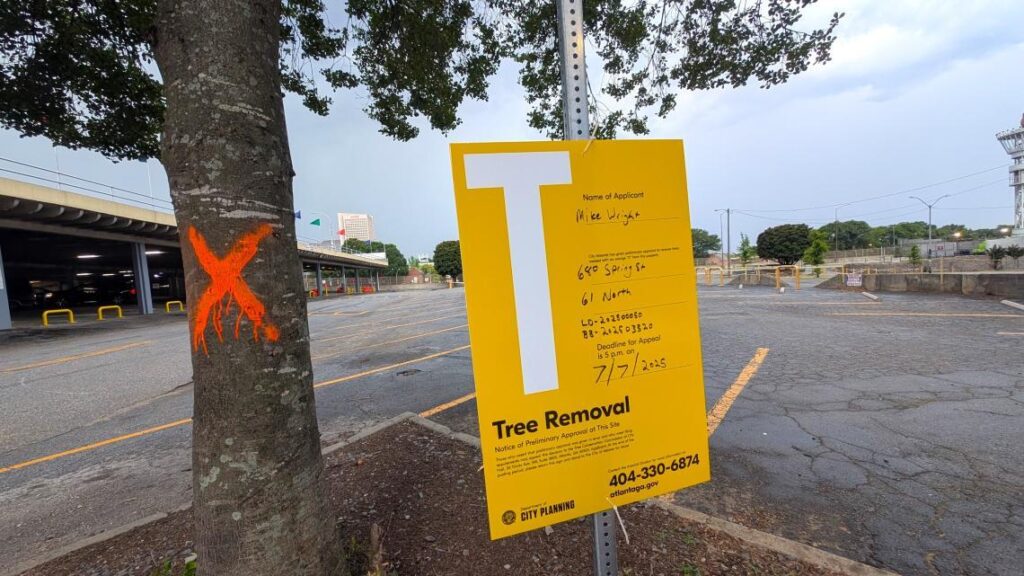
Atlanta has regulations designed to protect the city’s tree canopy. The Arborist Division oversees tree protection and permitting for trees on private property within the City of Atlanta.
Whether a tree can be removed—and what process applies—can depend on factors such as:
- Whether the tree is healthy or hazardous
- Where the tree is located
- Whether it is part of a construction or development project
- The size and characteristics of the tree
- Whether the property is within the City of Atlanta
- Whether the tree is located near a home or other structure
If you’re unsure what applies to your property, it’s better to check before the work begins.
2. Atlanta’s Tree Protection Ordinance Was Updated for 2026
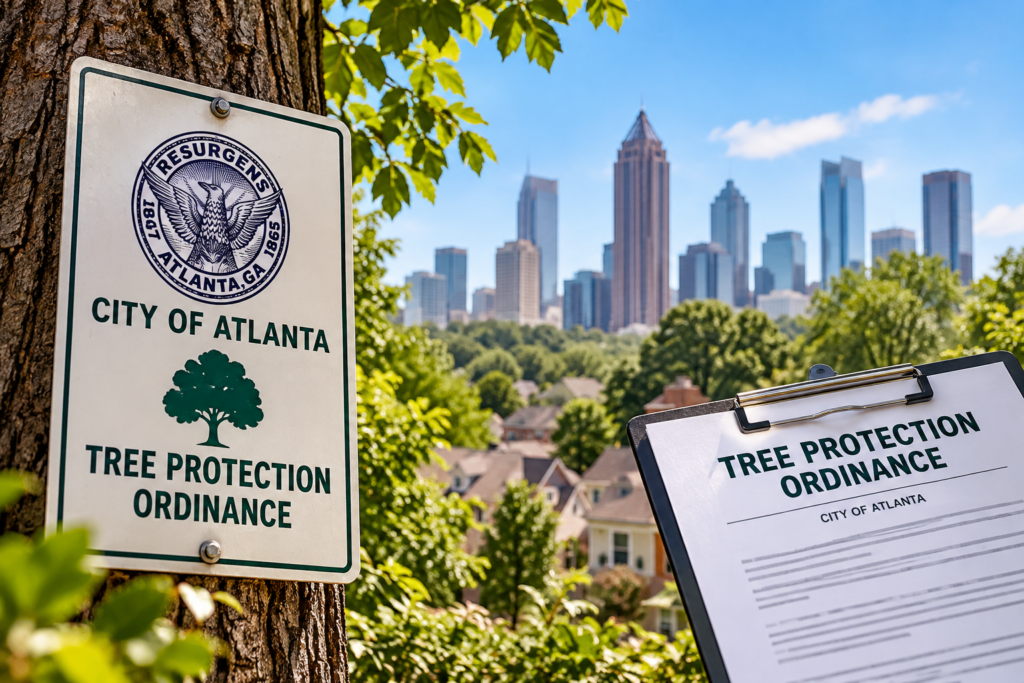
The City of Atlanta’s updated Tree Protection Ordinance became effective January 1, 2026. The City also provides a specific version of the ordinance for projects submitted on or after that date.
One notable change is an increase in the tree recompense fee to $140 per diameter inch of tree trunk, effective January 1, 2026. The ordinance also includes provisions encouraging replacement planting.
That doesn’t mean every homeowner removing a tree will automatically pay this fee. Requirements depend on the circumstances and the applicable provisions of the ordinance.
3. Tree Removal Permits May Be Required
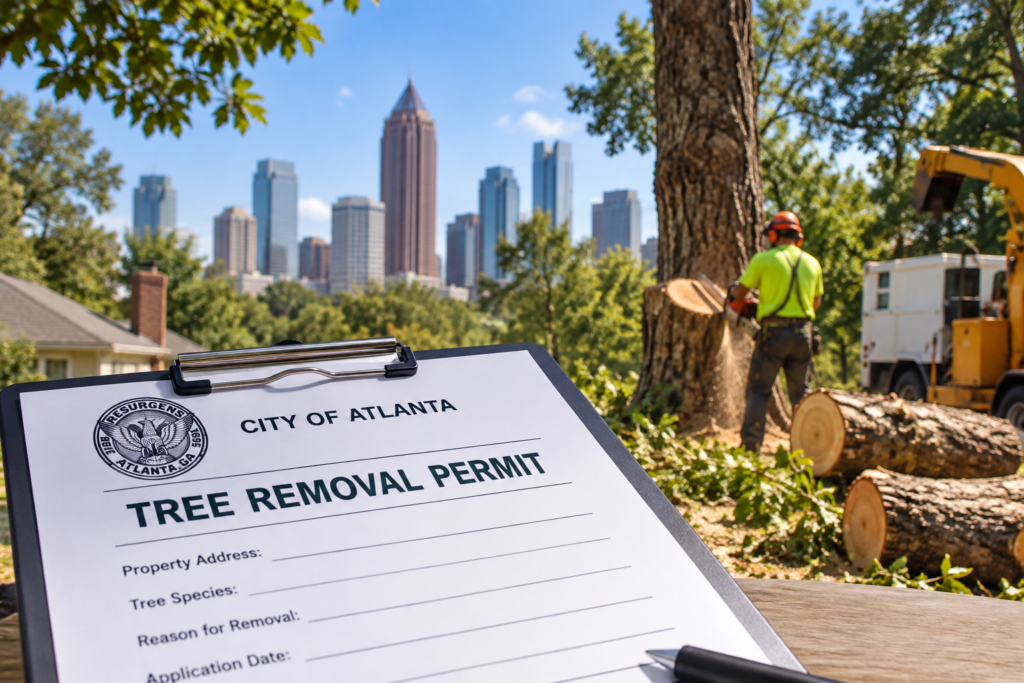
The City of Atlanta lists tree removal among projects that may require permitting. Its Arborist Division also handles applications involving dead, dying, diseased, or hazardous trees on private property.
For example, if you have a tree that appears dangerous or is showing serious signs of decline, there is a process specifically for Dead, Dying, or Hazardous (DDH) trees.
Before removing a questionable tree, homeowners should determine which category their situation falls under rather than assuming a permit is unnecessary.
4. Healthy Trees Can Have Different Requirements
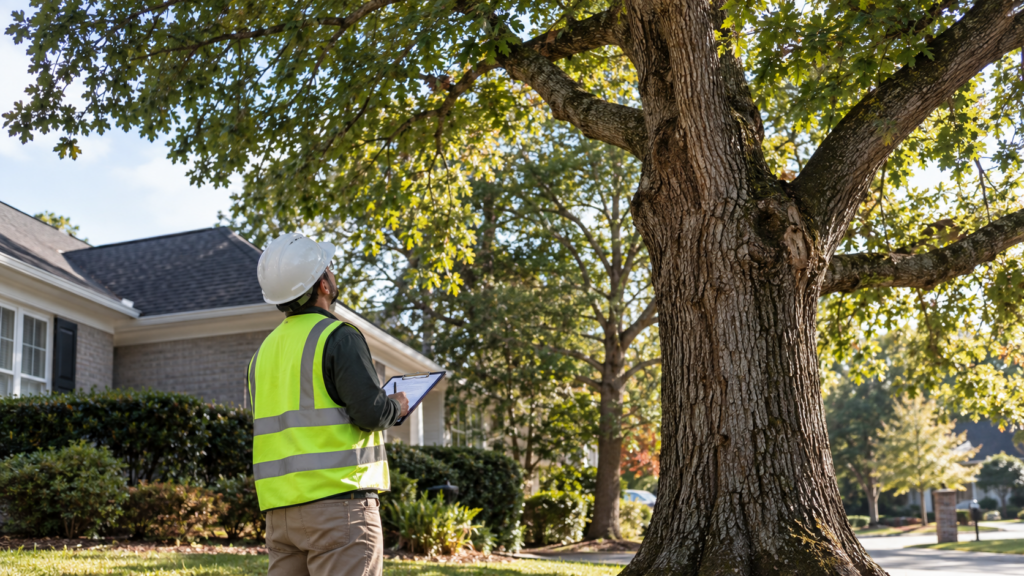
A common misconception is that homeowners can automatically remove any tree simply because it is located on their property.
Atlanta’s tree regulations include protections for healthy, non-hazardous trees. The applicable requirements can include permitting, tree replacement, or recompense depending on the circumstances.
This is especially important if you’re planning to remove a large mature tree simply because it is inconvenient or taking up space.
5. Trees Near Your Home May Need Special Attention
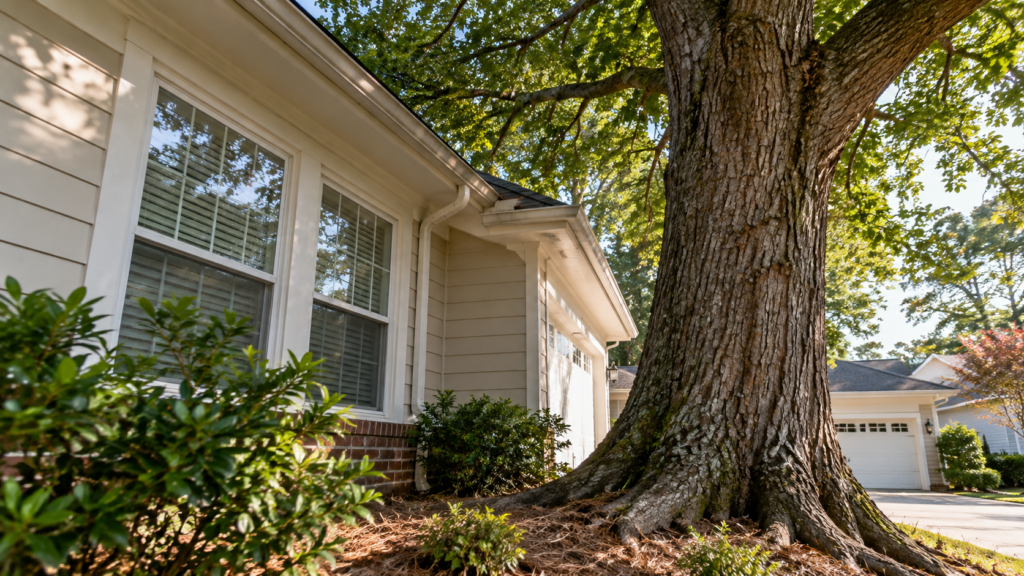
A tree growing very close to a house, foundation, driveway, garage, or other structure can create additional concerns.
Atlanta’s current ordinance contains specific provisions for certain trees located very close to existing single-family residential structures or duplexes. The exact requirements depend on the circumstances and eligibility under the ordinance.
If a tree is growing directly next to your home, don’t assume that proximity automatically means it can be removed without following the city’s process.
6. What About a Dead or Hazardous Tree?
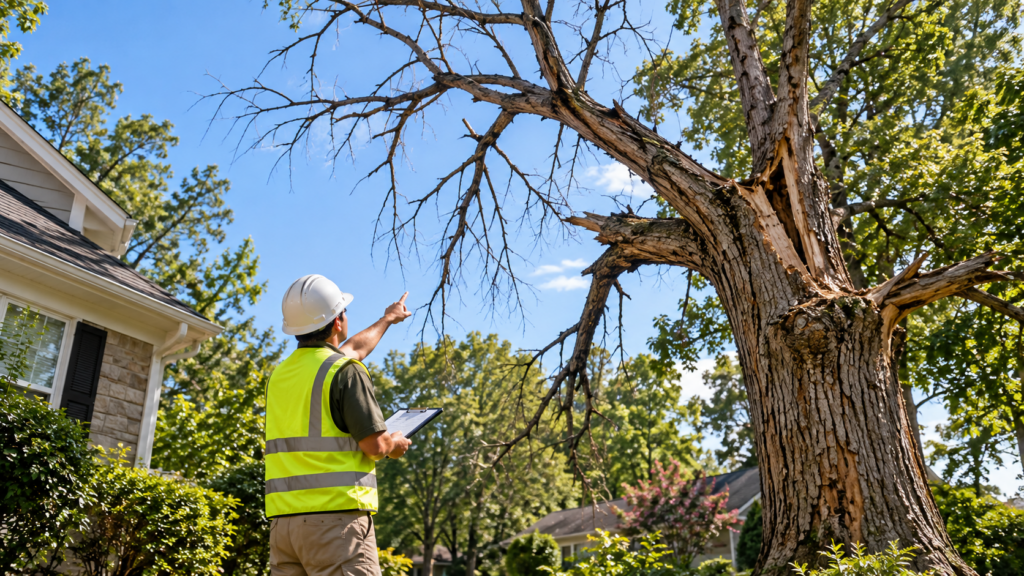
Dead, dying, or hazardous trees are handled differently from healthy trees in Atlanta.
The City provides a process for property owners seeking removal of trees that are considered dead, dying, diseased, or hazardous. The Arborist Division may inspect the tree and determine whether it qualifies.
If you believe a tree poses an immediate danger, documenting the condition with photographs can also be helpful when contacting the city or a professional tree service.
7. Construction Projects Can Trigger Additional Requirements
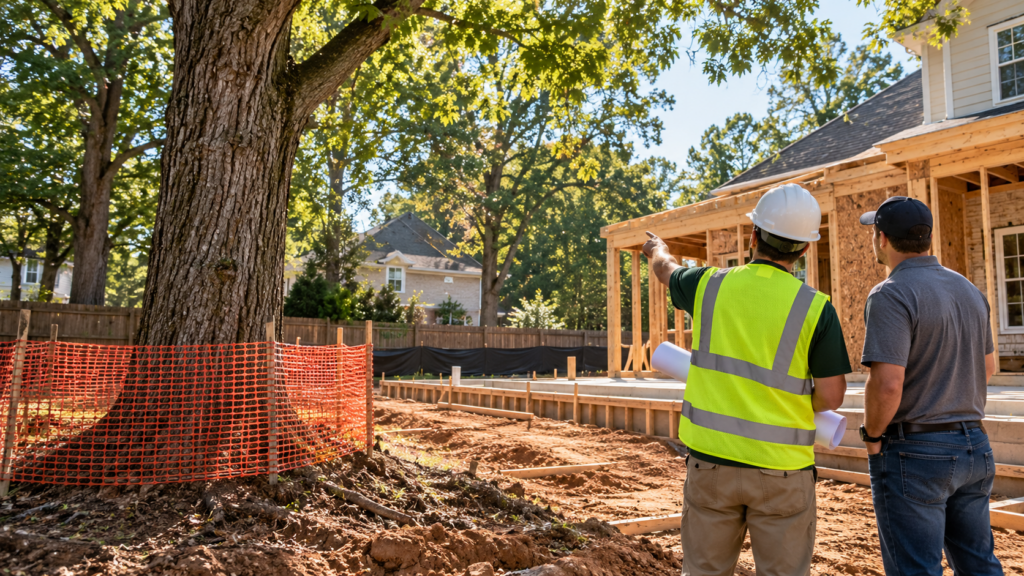
Planning an addition, new construction, pool, driveway, or another project that could affect existing trees?
Tree-related requirements can become more involved.
Atlanta currently requires a formal Arborist Meeting before submitting certain permit applications for projects that may impact trees. The City says applications without documentation of a completed Arborist Meeting will not be accepted when the requirement applies.
If you’re planning construction, it’s a good idea to consider the trees on your property before finalizing your project plans.
8. Don’t Forget About the Stump
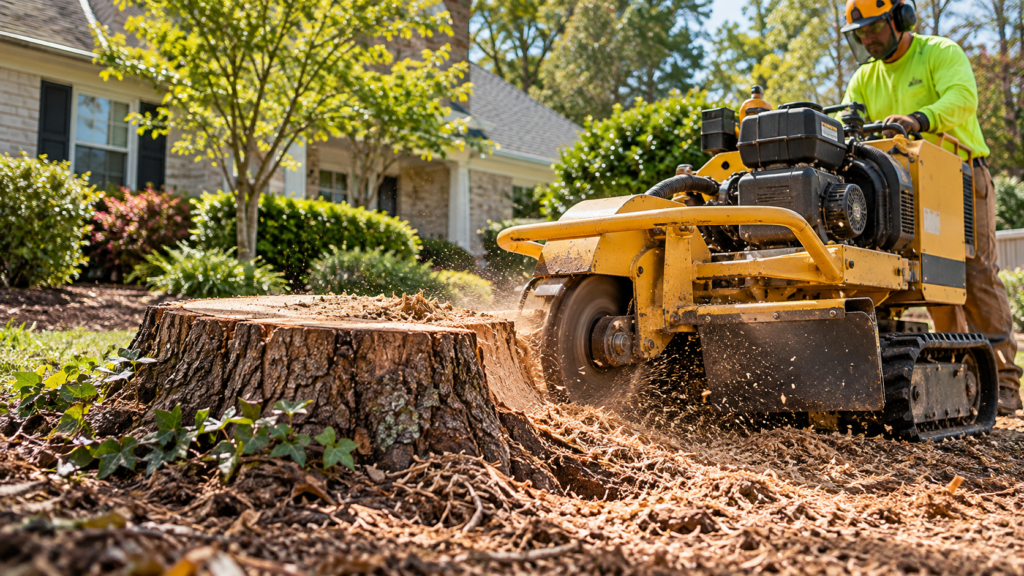
Removing the tree is only part of the job.
After a tree is cut down, the remaining stump can:
- Take up valuable yard space
- Interfere with landscaping
- Attract unwanted pests
- Make mowing more difficult
- Become a trip hazard
- Make future construction or planting more difficult
Depending on your plans for the property, stump grinding may be worth considering after tree removal.
9. Tree Removal Is Not Always the Best Solution
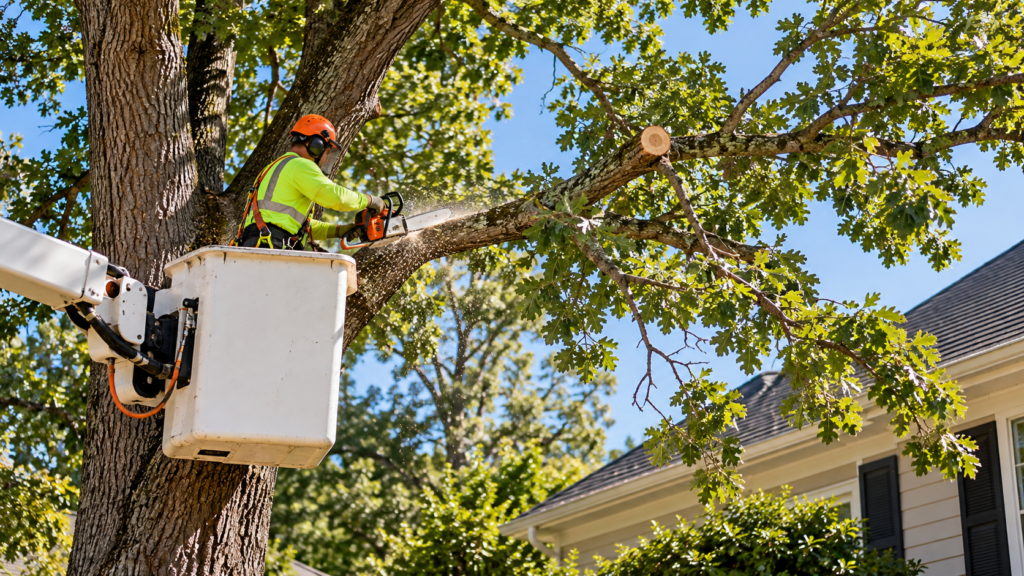
Sometimes a tree doesn’t need to be removed.
A professional evaluation may show that tree trimming, pruning, or other maintenance can address the problem while allowing the tree to remain on the property.
For example, removing dead branches or reducing problematic growth may help address a concern without requiring complete tree removal.
Every tree is different, so the appropriate solution depends on the tree’s condition, location, size, and surrounding property.
10. Make Sure You Know Whether You’re in the City of Atlanta
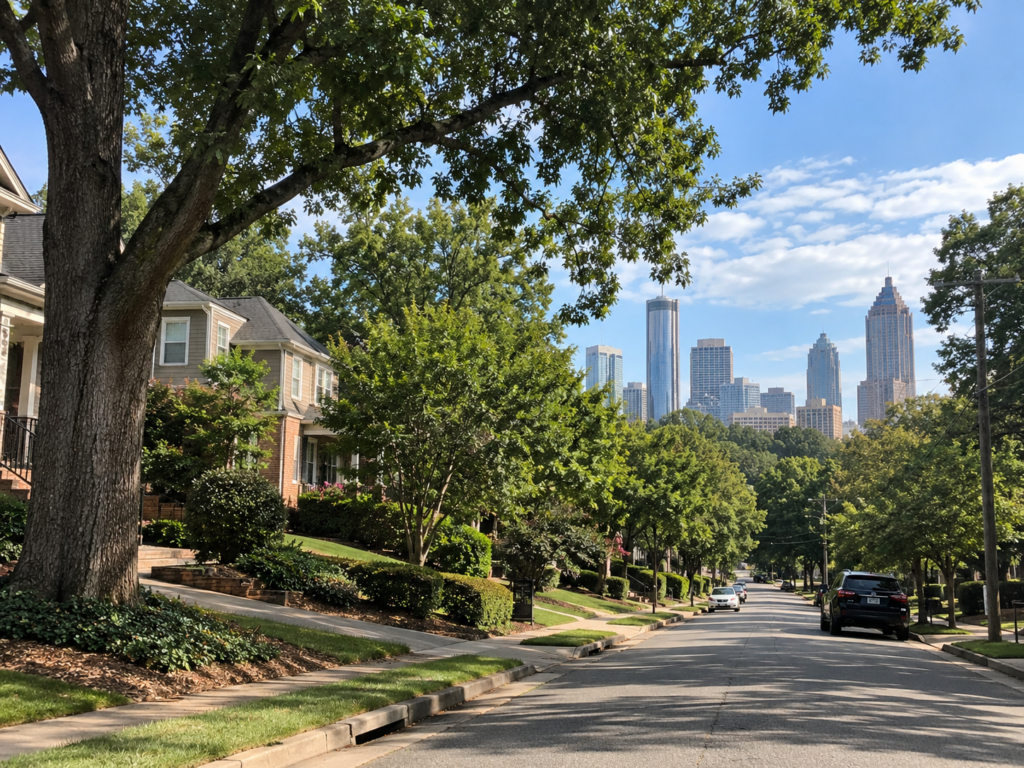
This is an important detail.
The City of Atlanta’s Tree Protection Ordinance applies to properties within the City of Atlanta. If your property is in a surrounding community such as Buckhead’s incorporated city context, Sandy Springs, Decatur, Marietta, or another municipality, different local requirements may apply.
For major tree work, confirm which local government has jurisdiction over your property.
Planning tree removal? Consider these steps first:
Before you schedule tree removal, consider these steps:
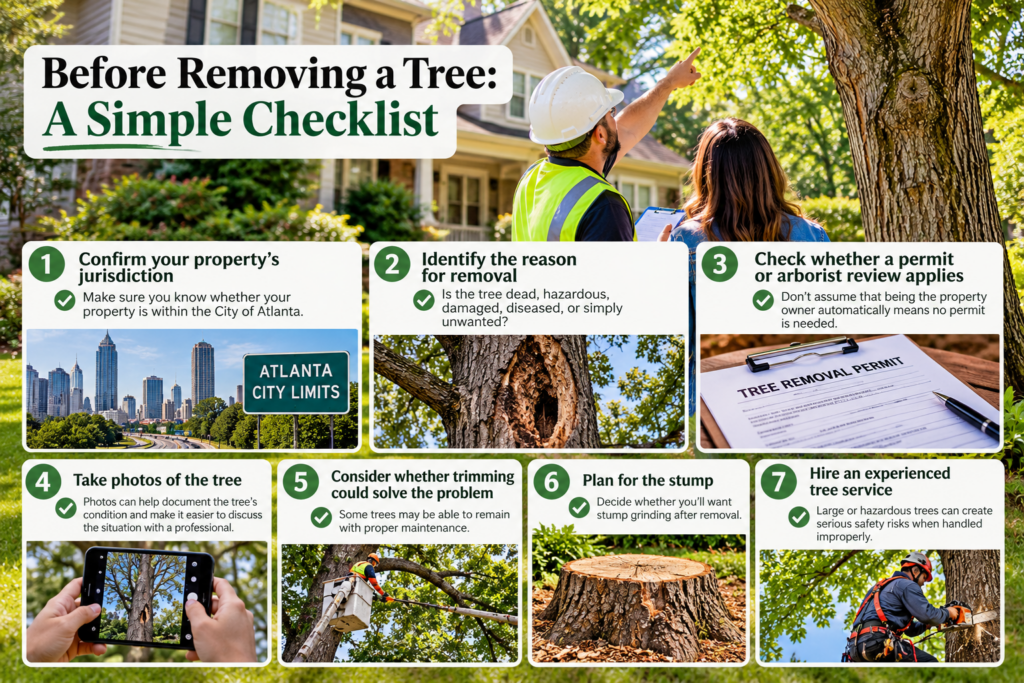
✓ Confirm your property’s jurisdiction
First, make sure you know whether your property is within the City of Atlanta.
✓ Identify the reason for removal
Ask yourself whether the tree is dead, hazardous, damaged, diseased, or simply unwanted.
✓ Check whether a permit or arborist review applies
Keep in mind that property ownership does not automatically mean a permit is unnecessary.
✓ Take photos of the tree
Photos can document the tree’s condition and make it easier to discuss the situation with a professional.
✓ Consider whether trimming could solve the problem
In some cases, proper maintenance may allow the tree to remain.
✓ Plan for the stump
After removal, decide whether you want to have the remaining stump ground down.
✓ Hire an experienced tree service
Working with an experienced tree service can help reduce safety risks, especially when dealing with large or hazardous trees.
Need Tree Removal in Atlanta?
If you’re dealing with a dead, damaged, overgrown, or hazardous tree, Atlanta Tree Movers can help you understand the work involved and determine the appropriate next step for your property.
Our team provides tree removal, tree trimming, stump grinding, and other tree services for homeowners throughout Atlanta and surrounding communities.
Before removing a tree, it’s always a good idea to understand the condition of the tree, the risks involved, and any local requirements that may apply.
Need help with a tree on your property? Contact Atlanta Tree Movers to discuss your project and schedule an assessment.